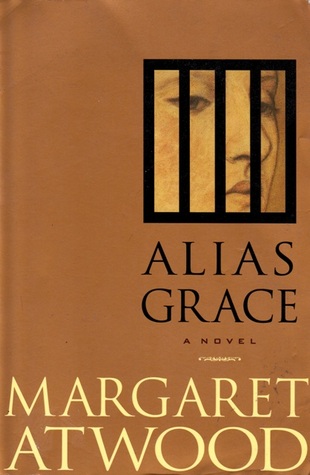
It was the beginning of the winter that year, I had felt the fresh frost on my windowpane that morning and in the night I had just finished Alias Grace! Meanwhile, the news came from the book world that the jury broke the rule and now there are two books that can be read this year with the same tag of Booker prize winner 2019 on them. Peter Florence, the chair of the five-member judging panel of Booker prize said, “The more we talked about them, the more we found we loved them both so much we wanted them both to win.” What can be a better time than this to say something about a book of Margaret Atwood, when she once more bagged this prize with Evaristo and also became the oldest ever Booker prize winner!
So here is this book… Alias Grace….. a unique one! Till the end of this book, I was not mindful of the fact that this book was based on a true historical case of the 1840s. I was reading the entire work with a pure sense of fictional work. When I got there towards the end of this tale my indignation could be explained as of a reader who was trying hard to know the suspense behind the tale but then the book finished and there came an afterword from the author stating this…
“Alias Grace is a work of fiction, although it is based on reality. Its central figure, Grace Marks, was one of the most notorious Canadian women of 1840s, having been convicted of murder at the age of sixteen.”
However, this superficial rage lasted in me just for a few minutes after finishing the novel and then my overall reading experience of this book brought me back into normalcy. And once the normalcy was restored, I once again felt the immense delight of reading this tale. Only an astute and highly proficient author can do this…converting a well-known and highly publicized real story into a magnificent fictional work…such wonderful storytelling and a deft art of narration.
Grace Marks came to a township of Toronto from Northern Ireland with her father and with her four brothers and four sisters when she was 13 and there she worked for 3 years as a servant and then at the age of 16 got convicted of murders, and then for the next many many years spending her youth in a penitentiary, she remained one of the most celebrated murderesses of her time. Some called her an accomplished actress and a most practiced liar, considering her a sham. Others felt she was innocent and sane assuming that at such a tender age she could not commit those heinous crimes. A doctor from Massachusetts Dr. Simon Jordon comes to understand her case after sixteen years. She tells her story and this doctor of her age writes down it with great observation and precaution.
She tells and observes him. He listens and infers her.
“While he writes I feel as if he is drawing me; or not drawing me, drawing on me – drawing on my skin- not with the pencil he is using but with the old-fashioned goose pen, and not with the quill end but with the feather end. As if hundreds of butterflies settled all over my face, and are softly opening and closing their wings.”
ALIAS GRACE
This way Atwood narrates the story of Grace Marks through these two characters in an alluring manner. This book is a classic example of class conflict, lust, the complicacy of a trial, and psychic battles within humans. I enjoyed every part of the book. Dr. Simon’s parallel story with all his desire-driven thoughts gives a holistic fictional sense to this book.
You will find so many things here! There is a panoramic sea voyage here, scullery maids and servant girls with their lives and emotions, a portrayal of fear in the upper class of rebellion that had occurred there during that period. An emotional relation between Grace and her friend Mary Whitney is there. There are morose and churlish characters, an interesting paddler, unsolicited relations between the upper-class employer and lower-class worker. The poetry of Atwood reflects through characters as well. Jamie Walsh, an interesting character plays sometimes songs upon his flute:
“Tom, Tom, The piper’s son,
ALIAS GRACE
Stole a pig and away he run,
And all the tune that he could play
Was over the hills and far away”
If you are an Atwood fan and even if you have read her other great works still you cannot miss this book at all!
19th Century 20th Century Adventure Africa American Asia Booker British Literature Children Classic contemporary Crime Detective Drama Essays fantasy French Literature German Literature Gothic Historical Fiction Horror Humor India Indian Literature magical realism Memoir Music Mystery Nature Netgalley Nobel Prize Non Fiction Novel Novella Philosophy Play Poetry Race Romance Russia Russian Literature School Short Stories War Women
 BOOKBROODER