
The narrator reached a place with his friend Serval, after fifteen years. Serval had rebuilt his chateau which the Prussians had destroyed. He loves the district, it’s springs, woods, pools, hills, they all are like joyful events to him. One day when they were stepping along the countryside, they saw by the thicket that was forming a boundary of the wood of Sandres, a cottage in ruins!
He recalled that last he had seen it in 1869, it was neat, covered with vines, chickens before the door, but now it is sadder than a dead house, skeleton standing bare and sinister.! His friend Serval told him the history of its inhabitants. The father, an old poacher, had been killed by the gendarmes. people called them “Les Sauvage.”
He asked,
“What’s become of these people?”
And Serval narrates the story of Mother Sauvage then. When the war was declared her son who was thirty-three was enlisted and he left his old mother alone. And far from the village at the edge of the wood, she remained alone in her isolated dwelling. One day Prussian force arrived and as per the rules it was billeted upon the inhabitants, as per properties and resources of each. Four soldiers were allotted to her cottage.
And now without revealing the further story, I would like to tell that Maupassant has converted this plot, into a compact and dense tale of vendetta. Vendetta of an old mother against the armed soldiers! But For what? For her son. For her old husband. But there can not be a blood -feud. There can not be a wrangle. How can it be? This old and lonely woman, This Mother Sauvage can not face them with all her strength. But she did it her way!
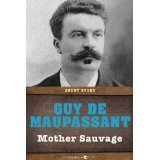
This is a heart-rending, tragic story. The backdrop is ‘The Franco-Prussian War’ of 1870, I assume as the year mentioned in the story clearly indicates it. I loathed the outcome of the story, and it will generate smarting sensations in your heart, but it’s compact execution I liked. The mother’s unemotional vengeance was something I will remember, the author has very strangely portrayed the contradiction of ‘ an emotionless cruel act’ and ‘a fervor of love towards her son. She showed her vengeance and love both in her deadpan voice of silence!
“A sick thought can devour the body’s flesh more than fever or consumption.”
― Guy de Maupassant
 BOOKBROODER