Have you ever seen this trefoil plant?

And that fairy fly?

Those three leaves adjoined at one slender stem, that yellowish flower on top of them! This three-leaf structure and its flower on top looked so guiltless to me. And that fairy fly looks squeaky-clean, Impeccable!
With respect to this book, I felt like that newly born fairy fly of 0.1 mm long size, trying to hoop around the circumference of the trefoil leaves, trying to extract the greenish charm spread over them first, and then aiming at that bulbous yellow color next, but failing every time in midway and falling straight to the grimy root of this plant.
Actually, during the period of the past four years, I have tried to read one or two books of Wodehouse many times. I couldn’t manage to fulfill my want. This is the only book I have in my kitty, the physical copy, procured by me without any rebate… Fully paid in cash… and I made an effort with this one at least three times in the last three years but after reading a few pages once and the other times reaching somewhere midway with the least focus of a reluctant reader trying to cross his comfort boundaries, I jumped to other wagons. I thought this is not for me and my pencil smears on its pages have not set foot beyond a few chapters.
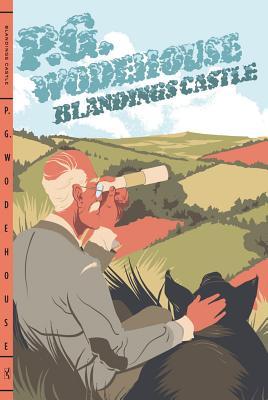
It seemed too much aristocratic, I thought to myself pretentiously in my first two readings. Though I did not get the hang of what aristocratic British writing exactly was. I foisted on me this postulation, based on some heresy, to justify my act of giving up midway, his books. In my initial book reading days, I had read George Orwell praising the author quite copiously somewhere, as I had read Orwell’s writing, I could mean it. Similarly Evelyn Waugh was also giving him high ratings. These praises were my initial stimulus to try the author. I never forget those names who introduced me to a new author when I was new to reading. At the beginning of this year on one fine day, I drew my breath in, sharply and pronounced to myself that this year I will read many British authors seriously and Wodehouse must be among them without fail. And here my resuscitated determination could bring me round as today I finished this book. It was an attentive reading because this sort of book I don’t read much. This thought was just like an unsung ditty revolving in my head for no reason.
Contrary to my initial pretentious belief, the writing of P.G. Wodehouse is very much for the masses. It’s too amusing and a sort of rib-tickling spree you can be on immediately. I liked the writing, the wit, and the story all three things in this book. But the most enjoyable thing about his writing is those dialogues. In my first try at this book probably I was trying to extract the story behind it without delving deep into the conversations. And those dialogues are in my opinion are the high–octane doses to the readers in the author’s writing. They were cockeyed. They were no-nonsense too. So they were both absurd and pragmatic at the same time producing levity and laughter. My apprehension was perished by the well-crafted and unconfined and gliding descriptive sentences of the author, making the reading a treat and I enjoyed every bit of the book. This sort of British writing with such a fantastic comic sense was probably what I was not reading lately. At many places, it was chucklesome with a mild dose of fun. So I read Wodehouse too late seriously. I admit.
Jonathan swift’s somewhere said that the Satire is a sort of glass, wherein beholders do generally discover everybody’s face but their own. At many places I found the realization of this thought of Swift while reading the comical circumstances produced by characters of this story, where one particular character became the center of wit through his or her actions, and other characters just participated quietly without wearing off, making the experience for the reader even more amusing. This is one significant skill I found in the author. Initially, I needed some focus and read it scrupulously as the writing was not that much free-flowing for my case but my efforts paved the way from chapter three with the title PIG-HOO-O-O-O-EY. And what a funny chapter this one was. I laughed abundantly and then my tone was set for the movement further. A character describes how pigs are described in a different part of America.
“In Wisconsin, for example, the words “Poig, Poig, Poig” bring home in both the literal and figurative sense- the Beacon. In Illinois, I believe they call “Burp, Burp, Burp” while in Iowa the phrase” Kus, Kus, Kus” is preferred. Proceeding to Minnesota we find “Peega, Peega, Peega” or alternatively “Oink, Oink, Oink” whereas in Milwaukee so largely inhabited by those of German descent you will hear the good old Teuton “Komm Schweine, Komm Schweine, Komm Schweine.”Oh yes, there are all sorts of pig calls from Massachusetts, “Phew, Phew, Phew” to the “Loo-ey, Loo-ey, Loo-ey” of Ohio. Not counting various local devices such as beating on a tin can with axes or rattling pebbles in the suitcase.”
This book has two parts. The first one is the story of Lord Emsworth, his famous characters Fredrick, his pig Empress and the Beach, his butler, and his family members making loads of humor inside the Blanding castle. The second part is Titled ELSEWHERE, which has new separate stories, talking about whispered stories of Hollywood and this part is equally fun and frolic. A very satisfying read this time. I am a fan now piercing my way into his more famous Wooster and Jeeves series.
“She looked as if she had been poured into her clothes and had forgotten to say “when”. ”
― P.G. Wodehouse
 BOOKBROODER