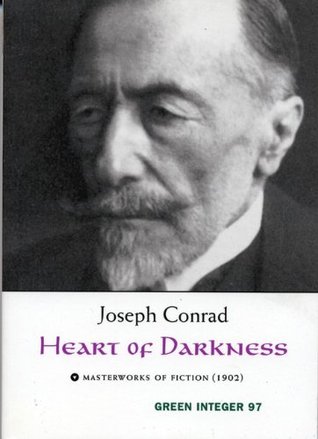
Sometimes back I got my hand on a book on Joseph Conrad in a library, it wrote somewhere in the beginning “both at sea and on land my point of view is English, from which the conclusion should not be drawn that I am an Englishman” Conrad was describing himself. It further said Conrad considered himself a divided man. In what context, I could not trace in time as someone forced me to shut the book for something else!
Having read only one title of his shorter work The Lagoon, I was not able to understand what was it refereeing to, and neither I could read that book completely. I also came to know that English was not Conrad’s language, he learned it quite late but when I read his most famous book finally, I just witnessed one thing… this man has the power of language!
How poetically and metaphorically this book has been written! Such a short book but such intense and mystic prose! My demystifying capacities were not at par though while reading this book, so I have to confess that extracting the real plot concealed behind this ‘impressively poetic prose’ was not an easy task for me. Marlow and Kurtz are two names. Marlow, a ferry boat captain tells the story, and Kurtz, an ivory trader remained an unseen, shrouded character till the very end; the author put Kurtz out of sight, though many dialogues had his name pronounced here and there. Kurtz became an aim of Marlow’s expedition.
‘He is very remarkable person, a very important one, in the true ivory country,…’
This book might have raised issues of racism, yet I saw it in a different light, it was fiction, and the way allegorical prose is usually written, it addresses an issue and keeps things in charge. Imperialism was a tendency, a mental belief by some that they are more civilized than others and their way is the best one, to be called civilized, and those who do not follow their way are uncultured. They kept hunting new territories and they called it new earth, unknown earth.
“What greatness had not floated on the ebb of that river into the mystery of an unknown earth!… The dreams of men, the seed of commonwealths, the germs of empires”
I think the book clearly criticizes European Imperialism, it was published in 1902, and there were already voices of anti-imperialistic movements all over. But can I call the book opprobrium? I am not sure. As I said, the story was not a great one for me, neither it could produce a stream of emotion in me, yet I thoroughly enjoyed the fluidic prose of the book and at times I was feeling too good reading it, going along like clockwork, not in a mechanical sense but in the literary sense.
“A taint of imbecile rapacity blew through it all, like a whiff from some corpse. By Jove! I have never seen anything so unreal in my life.”
In the eye of Nigerian novelist Chinua Achebe, this book dehumanizes Africans. I, up to some extent agree with it, though I will still feel that it is an allegorical work.
One more thing, I read two very famous and slender literary pieces lately, The Great Gatsby and this one, Heart of Darkness. The common thing is that both these books were not very successful at the time of publication; however, I have come to know that these books are taught to literature students in universities and colleges all over.
Do books evolve over the period of time? Do they sprawl? If yes, how?
How do they get incorporated into our life if they were not considered great initially?
This book is quite an experience for a book lover though, One must read it!
19th Century 20th Century Adventure Africa American Asia Booker British Literature Children Classic contemporary Crime Detective Drama Essays fantasy French Literature German Literature Gothic Historical Fiction Horror Humor India Indian Literature magical realism Memoir Music Mystery Nature Netgalley Nobel Prize Non Fiction Novel Novella Philosophy Play Poetry Race Romance Russia Russian Literature School Short Stories War Women
 BOOKBROODER