
Blue Hour by Tiffany Clarke Harrison
Is this book an exhibition of so many human emotions, a labyrinth of emotions? Perhaps yes, perhaps no. This book, for me, turned out to be just one emotion stretched over so many pages in such a tinkling tone and esoteric poetic prose, with a unique narrative thump that I could not put it down. That one emotion was ‘trauma’.
I must tell you that I was reading a Murakami book alongside that was going too well in pace, when I received this book, and it was an interesting thing to check that after reading a few pages of this book, would I turn back to Murakami to complete that first or not? But I did not.
And this book, from the time I started, was almost unputdownable. Not that I was liking the story, which was in fact not to my taste, but the tone, the pace, and the poetic clink that its prose generated after every sentence. Levitating in the monologue (it was almost that sort of) of an unknown narrator who decided to remain hidden till the end was sublime.
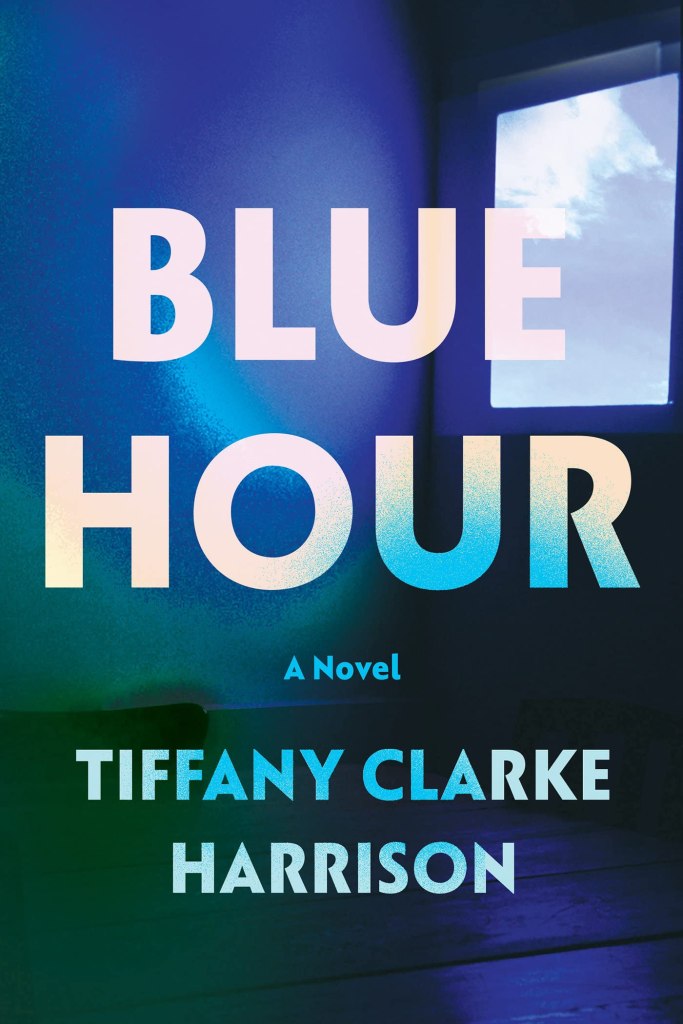
This is the story of a woman who is a photographer and biracial and who fights with the emotions of miscarriage and motherhood. Witnessing the violence endured by Black in US, she does not want to bring her black child into this world,
You think you’re the only one who is afraid? I’m afraid for our black child too.”
The book is small and can be quickly read. It has a multitude of themes. There is a question asked at the end of this book. Do you think the novel’s length heightens its impact? My answer is yes. Had it been a bit longer than this, it would have washed away the impact it created in such a short body of work. I was perfectly fine with the length. Its compactness made it more conceivable, allowing the reader to widen the throttle of his own imaginative faculty. The abrupt end of the novel, leaving some questions unanswered, left this book more noteworthy, at least for me, because something should remain hung on the head of a reader so that he carries it home and remains wreathed in the smoke of the work he just read.
“Voices raise. A scuffle. A shout rings out, shattered glass, and a bang. The herd of bodies thickens and shifts in an agitated wave as police storm the streets. A grey cloud of gas explodes into the air. Everyone runs. Screams. A high-pitched scraping of vocal cords and eardrums, deep-bellied animal cries. I let go and lose you, stop and stand in the middle of the sidewalk, clicking, clicking, clicking and camera, A stampede.”
The book may not be for all, but this book worked well for me, and I am recommending it to all who love a poetic language, with symbolism that connotes anxiety, uncertainty, fear, motherhood, and parenting on the human side, and racism, violence, and social security on the outside.
I thank NetGalley and Publishers for providing me with a copy.
19th Century 20th Century Adventure Africa American Asia Booker British Literature Children Classic contemporary Crime Detective Drama Essays fantasy French Literature German Literature Gothic Historical Fiction Horror Humor India Indian Literature magical realism Memoir Music Mystery Nature Netgalley Nobel Prize Non Fiction Novel Novella Philosophy Play Poetry Race Romance Russia Russian Literature School Short Stories War Women
 BOOKBROODER