
What is in the name?

“I do not approve of anything that tampers with natural ignorance. Ignorance is like a delicate exotic fruit; touch it and the bloom is gone.”

Good heavens!

What that Bunburying was all about?
Come on! What is in the name? Why should you make it an insuperable barrier? Love is important, name is not. Two young men! You should love! As Algernon said you should dare to love wildly, passionately, devotedly, hopelessly! And these girls, these two young girls! They travel with their diaries all the time! All records are handy, who proposed them first, on what day at what time?

“Well, in the first place girls never marry the men they flirt with. The girls don’t think it right.”

Let me take up my tong and put a few lumps of sugar into my cup. Am I going to consume it? Of course not! What could have put such an idea into your pretty little head? Too much sugar is bad.

But this play of Wilde was too sweet, very lively, and tantalizing too! I enjoyed almost everything in the play except the ending. That handbag event was a little doltish, but not bad for sure. Those dialogues, in plain language, made so many fun moments. I laughed intelligently. The last time I was reading Wilde, was in one of his ghost stories; even the ghost of Wilde was also funny. It seems to me that Wilde is a very clubbable author; I would have enjoyed a jamboree with all his characters along with the ghosts, had he invited me!

This was my first play by Wilde and I loved it. It is simple and very straightforward, but there is one thing that made it a bit different for me. It was that metaphoric implementation! Mixed identities, the craze for a specific name, social possibilities, and cleverness of an act. I am sure if you see a bee after reading this play, you will be able to draw a metaphor of your choice from that bee! It gives you that power.

This play’s popularity could be understood. I saw so many famous lines that I had read here or there, as a quote from Oscar Wilde, in this play.

“All women become like their mothers. That is their tragedy. No man does. That’s his”.

If you are a single man, this play may give you a warning, as it says, by persistently remaining single; a man converts himself into a permanent public temptation. So be aware of that! I will recommend this play for having a freshening encounter in your bookish journey if you have not already read it!

19th Century 20th Century Adventure Africa American Asia Booker British Literature Children Classic contemporary Crime Detective Drama Essays fantasy French Literature German Literature Gothic Historical Fiction Horror Humor India Indian Literature magical realism Memoir Music Mystery Nature Netgalley Nobel Prize Non Fiction Novel Novella Philosophy Play Poetry Race Romance Russia Russian Literature School Short Stories War Women
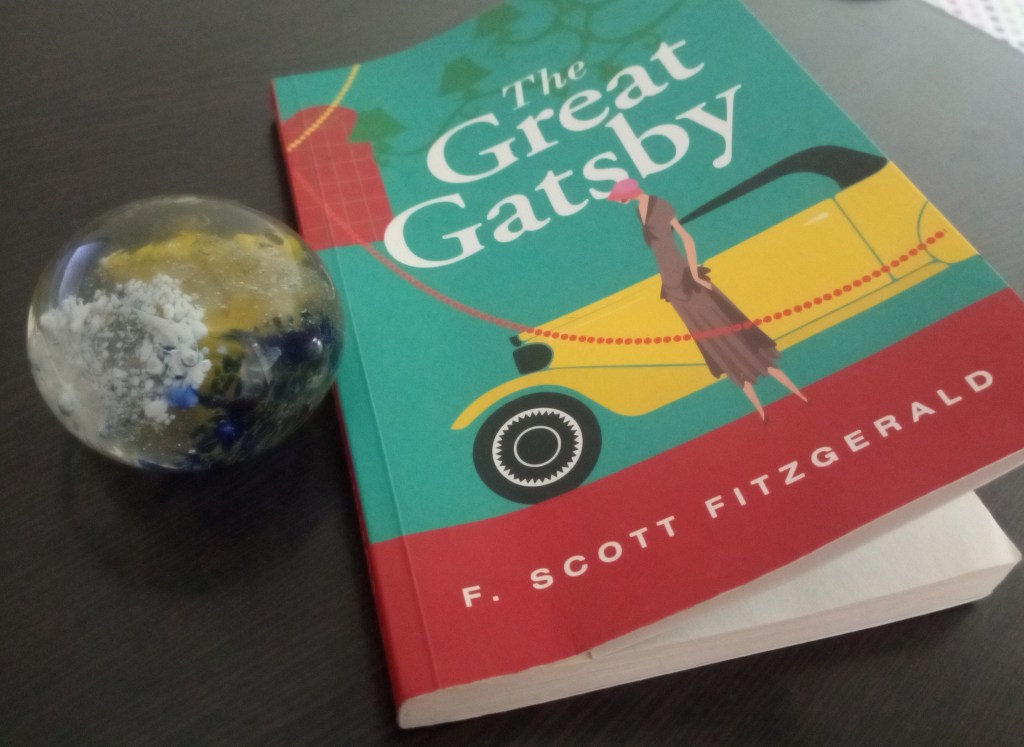
The East, The west and Mr. Gatsby!

I’d got a strong impression that I was picking my books with care. The practical thing was to find easily those which have been in vogue for many decades. This one was of the kind. There is no rule of east or west. Most books that are popular in the west are not known in the east. But this book’s case was different. I had heard the title of this book in media or on TV, there was gossip around it and it is among those few. I read it last year. Before reading it I bought it too. It’s such a slim book; when I received it, it looked like the body of a lissome teenager! Look at that light yellow car, a fragile young woman, and that heavy old-fashioned paperweight in cahoots on my table!

“Whenever he sees I am having a good time, he wants to go home.

…Never heard anything so selfish in my life.”

The narrator is a man of slow thinking and full of interior rules that act as brakes on his desires, he admits himself in the middle. Though the book is the story of one Mr. Gatsby, when it ended, I paused, and thought at least once, if the book was the scheme of the narrator. It seemed to me if it was a mere postulation of the narrator, who was decidedly the neighbor of Gatsby, and who began his proposition with those famous lines in the beginning, “whenever you feel like criticizing anyone,… just remember that all the people in this world haven’t had the advantages that you’ve had .”

I did not like the story much, I guess the story is rather simple and does not bring elation, and maybe this book carries with it some sort of cultural mania that prevailed at the time it was written. As its blurb says, ‘‘The story of the fabulously wealthy Jay Gatsby and his love for the beautiful Daisy Buchanan, of lavish parties on Long Island at a time when The New York Times noted: “gin was the national drink and sex the national obsession,”.

I like Fitzgerald’s writing; the first time I read him in ‘winter dreams’ I still remember some of it. In this book too, I loved the inherent charm of his writing, his writing is straightforward and uncomplicated. It flows too well for a reader. The consistency of prose made me go through it unscratched. I will give high points to the author, he wrote an uninteresting story in a gripping flow. He probably delivered his message in such a simple language that you can sometimes feel there was no message at all. The contrast of east and west in the American context was quite obvious to a reader like me who does not even know what they really mean.

“I see now that this has been a story of the West. After all- Tom, and Gatsby, Daisy and Jordan and I, were all Westerners, and perhaps we possessed some deficiency in common which made us subtly unadaptable to Eastern life.”

The mystery of Gatsby’s character was revealed to me in this order as I proceeded in the plot; he was first ostentatious, then as if a bootlegger, then amorous and finally I found him as if he was just an unlettered gentleman! What he really was!

For me, the latter part of the book was more interesting. Many unexpected things happened and it changed my opinion about the book significantly.There were moments of transitory exultations for me in the latter half, especially in that ‘yellow car event’ and that changing of Tom’s character from a libertine to a prig to safegaurd his wife!

The story took a sermonizing turn towards the end. It showed that flaunting one’s wealth and fortune to others at lavish parties does not always bring you a true friend, though you may always remain in news, in gossip, in vogue. Yet you are alone in the end. I found this book an adventitious authority, coming from a cultural trait, rather than a native-born. Though I may be wrong as I am unaware of both, the prevailed culture and the locals!

19th Century 20th Century Adventure Africa American Asia Booker British Literature Children Classic contemporary Crime Detective Drama Essays fantasy French Literature German Literature Gothic Historical Fiction Horror Humor India Indian Literature magical realism Memoir Music Mystery Nature Netgalley Nobel Prize Non Fiction Novel Novella Philosophy Play Poetry Race Romance Russia Russian Literature School Short Stories War Women