“Has he a passport anyway or something of the sort?
To be sure he has, he is a good man, a man of experience; three rubles he’s promised to pay.”
Dostoevsky published many short stories in during 1846 to 1848 and this is interesting to know that his first novel ‘Poor Folks’ was also published in 1846. The wizard was getting ready to rule the world. I have encountered his non-physical style of writing in his novels Crime and punishment and the Idiot. What I mean by non-physical is his famous cerebral narration, which happens inside the head!
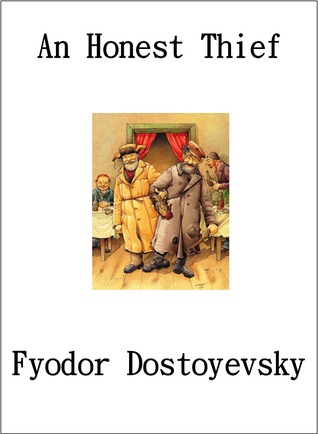
Last week I decided to opt for his short stories and two tales that got qualified were ‘Bobok’ and this one. In this tale, an elderly man (Astafy) convinced Agrafena to admit himself in the kitchen as a lodger and boarder. Agrafena is the cook, washerwoman, and housekeeper of the narrator. The narrator is the owner of the lodge. Agrafena was such a silent creature that except for some dinner inquiries she had not uttered a single word in the last six years.
This elderly man turns out to be an old soldier and he shares many stories. One day a man steals a coat from the peg in front of their eyes and this old man runs after him, but could not catch him and returns empty-handed. But he makes friends with the narrator after this deed the narrator is the owner of the house!
Once the old man starts sharing his story, it becomes a story within the story and the original narrator just disappears. My binoculars could not find him anymore. The two terms you will find in this story’s description, are ‘dual-layer narration’ and ‘naturalistic storytelling’. The story within the story is dual-layer narration and the meaning of naturalistic prose that I comprehended initially was something which is natural. But this is not the case. It’s not being realistic. Certainly not like Chekhov’s realistic tales. Naturalism occurs when the character of humans is governed by the environment in a plot.
One day this soldier, who was a tailor too, does not find the breeches, that he had made for some wealthy men, He talks to the drunkard,
“No Astafy Ivanovitch, I never- sort of – touched your breeches.”
This was my first story of Dostoevsky. And I will remember it. If you will read this, you will find a strange thing in the dialogues. You will find the repeated utterances of all the time and though it may be highly irritating. It did not irritate me. When the story was finished, which was not a happy ending the repeated occurrences of salutations made it multifold sympathetic.
There is a very strange tone in all this narration and that tone is a tone of commiseration. If you will read it in flow you will feel as if a climax scene is going on and the compassion and sympathy are outpouring.
In the major part of the story, you will see the narrator(that old man) would be speaking to the three people at a time. First the drunkard (Emelyanoushka ), the second is the inn owner (the sir,) and the third, is you (the reader). And what a wonder this genius has constructed the game. I loved it.
It’s about poor folks whom this drunkard man represented! One poor fellow who was an honest thief!
I also know that Dostoevsky experimented with many narrative techniques in his early career and this tale might have tumbled out of his experimental desk. Who knows, but this was a new tryout for me too.
A bizarre sympathetic tone throughout, I will remember for a long!
19th Century 20th Century Adventure Africa American Asia Booker British Literature Children Classic contemporary Crime Detective Drama Essays fantasy French Literature German Literature Gothic Historical Fiction Horror Humor India Indian Literature magical realism Memoir Music Mystery Nature Netgalley Nobel Prize Non Fiction Novel Novella Philosophy Play Poetry Race Romance Russia Russian Literature School Short Stories War Women


 BOOKBROODER