
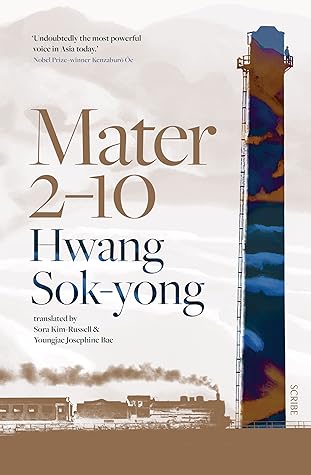
Do you know what Mater 2–10 is?

Photo by Frans van Heerden on Pexels.com

“Up there, time was like a rubber band, stretching out long and taut, only to snap back the moment he let go, making it impossible to keep track of its passage.”

It starts with a strange toilet scene. At the top of a chimney, almost 45 meters high. He has learned how to survive there. “Yi Jino has set up his toilet on the opposite site of the catwalk, as far away from his tent as possible.” After doing his best to find out the right material to collect his ‘doo-doo’, he finally reached the conclusion that the porridge container is the perfect one for the makeshift toilet. He is protesting this way. Jino is in his mid-fifties and had been a worker in a factory for 25 years.

In the beginning, I was getting the miasma of Marquez in this story, when someone was eating a living salamander, and a legend of Juan Daek, a woman with broad shoulders and muscular limbs who once looped a noose around the neck of a big pig, as big as her own size in the water, and locked her arms around another small pig’s neck and brought them out, but soon when the working class struggle of the factory workers started, it reminded me of Gorky, a book on such a topic I had read years ago. ‘The Mother’ perhaps. The book takes you to the turn of 20th century Korea. Japanese occupation of the Korean Peninsula. Confucian village schools were replaced by Japanese sohakgyo; in more common sense, it would be called “normalization schools.” Hwang Sok-yong says that his style is “mindam realism” mindam is something between folklore and plain talk- An oral form of history making. Mater is mountain in Japanese. Mater 2-10 was a locomotive that was captured during the Korean war. It shows an enduring image of Korean war. It’s a multigeneration tale and features industrial workers as its main characters.
I knew little about the history and geographical tussle of the region, but this book gave me an idea of the insider’s perspective. They are nameless activists, workers and common people. The interesting thing that I found in the book is how the dialogues and scenes were created around the
ecosystem of ‘railroad constructs’ in the peninsula. It deals with the Japanese colonialism and the fight and aspiration of rail road laborers, at many places it created an enlightening discourse for me. It was something new for me. Though in the middle part I lost some interest due to so many
historical and confederate accounts incorporated, and the book looked like a historical account of a struggle, but as soon as I started hating it for the same, the novelistic cadence of the book was reinstated by the author, that took me to the end of the book.

This is the story of the author’s hometown and the working class living there, being a personal beholder of the things around, the author has been able to create the ’emotional deluge’ to drench a reader like me, but it was not abundant for me. Overall the book was a good exploring experience for me that gave me an understanding of the geography, politics, colonialism and struggle of a working class. As the author writes at last,

“Instead of famous faces of Korean history that already star in countless text, I modelled the characters in this book after the many workers who have been reduced to historical specks of dust.”

I agree to a great extent.

19th Century 20th Century Adventure Africa American Asia Booker British Literature Children Classic contemporary Crime Detective Drama Essays fantasy French Literature German Literature Gothic Historical Fiction Horror Humor India Indian Literature magical realism Memoir Music Mystery Nature Netgalley Nobel Prize Non Fiction Novel Novella Philosophy Play Poetry Race Romance Russia Russian Literature School Short Stories War Women

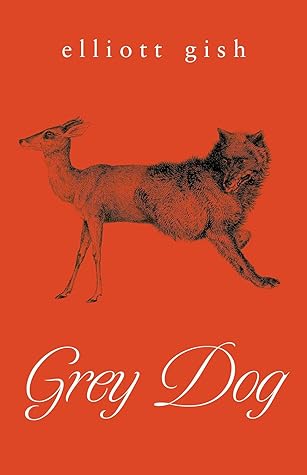
Gothic horror or a woman’s rage? Grey Dog by Elliott Gish

Photo by Anete Lusina on Pexels.com

” It happened again. God help me, it happened again.”

The story begins in 1901. A lady is going to fill the post of teacher in a small village town, 20 miles away from Portsmouth. The train she is on is stuff-packed. Mr. Grier, an acquaintance of her father, will come to pick her up from the station. At his house, she will board. She is Miss Ada Elizabeth Byrd. This is her story. She writes down everything date-wise. She had been posted at Willoughby before coming here.
She is pondering after looking at a door in Grier’s house. She is always worried about how much Mr. Grier has been told about her year in Willoughby, the place of her previous employment.

“I stumbled looking at that door, and not only because my legs were stiff with disuse from the journey, for there had been another red door, only a year ago, that had irrevocably changed the course of my life. As I looked at Grier house, I felt that I could see that door laid neatly over this one—that I was in Willoughby again, watching that door open onto my ruin.”

She joins the school where most children are farmer’s kids, she teaches them in her unique style, takes them to the woods, and shows them insects and animals. I witnessed some beautiful natural settings. Wilderness, grassy, woody, and full of insects and skulls. She also portrayed the social setting and demarcation between the families in that small place.

“They were of course from the other side of the bridge—the side where, as her husband had said, people ain’t quite like us.”

Then there are some queer and creepy things that happen to her again and again. She does not know what it was all—her illusion or some impending danger chasing her. She wants to tell all those hideous, horrible things that were happening around her. But she shies away, yet she wants to unburden her soul to someone. I enjoyed how these scenes were depicted. The characters in the book are unique and developed really well by the author. I liked them. That strange Melville girl child and her strange father, Agatha. They stay with you.

In the past month, I have read so much women’s writing and women’s-centric themes. I have requested this book to change my taste, to get some horror, as it is claimed in the blurb, gothic horror in historical fiction. Though creepiness was there, there were some scary, macabre scenes. But they were kept under control and beautifully incorporated into the plot. But as I ended, I found that it was another book that was nothing but all about a woman’s fury, frustration, sensuality, shame, and emancipation.

Being the debut novel of the author, I will highly appreciate the story-telling skill; it is clean and
figurative language. Very imaginative. At some places, her sentences are explicit in meaning, and at other places, they are non-literal. A push factor, which I consider an incentive for a reader, was present. The author pushed me ahead in the plot with her off-centre yet lucid writing. Her way of keeping the reader engaged in a scene was amazing; she will force you to keep thinking, like, ‘Was it about the wind in the trees? or about an animal moving around in the brush? Or was it about derangement? or was it just deceptiveness? or the cleverness of the characters involved? Was it about the shame and scandalous past of the characters?’

I will especially mention the scene when ‘Ada’ is stuck inside the school and there is a storm outside. She is preparing new words for the kids, and a danger lurks from outside, and all those scenes where Ada turns violent and loses her temper are impressively written. This book was an almost five star reading experience for me throughout. The writing, story telling, and historical Gothic setting were all to my taste, and I thoroughly enjoyed reading this book. Only the ending was not as per my expectations; it would have been made a bit bigger, both in message and in story. Also, while incorporating so many mysterious and hideous scenes, somewhere the author stretched the story out and made it a bit slow in the middle. The title Grey-Dog remained a bit deceptive, as I kept yearning for the appearance of that hideous creature after every macabre scene. But for me, overall, this book was an amazing read, and I will recommend it to all. It had a greater message than a mere horror tale. A promising author.

Read this story of a woman’s rage and rescue, of a woman’s frustration and freedom, of a woman’s shame and sensuality, of a woman’s fear and ferocity!

“Have you not guessed it yet? I am not a place where nature can be weeded and tamed and kept in order. I am tree roots- and dark hollows- and ancient moss- and the cry of owls. I am not a thing that you can shape, not anymore. I am no garden, but the woods, and if you ever come near me again, every bit of wilderness in me will rise up to bite you. I will tear your throat with my teeth.

Grey Dog

At the end, I will say, I felt like some gelatinous clouds of frogspawn were turning into wriggling pollywogs!
Thanks to Netgalley and ECW Press for an advance copy.

19th Century 20th Century Adventure Africa American Asia Booker British Literature Children Classic contemporary Crime Detective Drama Essays fantasy French Literature German Literature Gothic Historical Fiction Horror Humor India Indian Literature magical realism Memoir Music Mystery Nature Netgalley Nobel Prize Non Fiction Novel Novella Philosophy Play Poetry Race Romance Russia Russian Literature School Short Stories War Women