“It is doubtful that the world has a meaning; It is even more doubtful that it has a double or triple meaning, the unbeliever will observe.”
JORGE LUIS BORGES
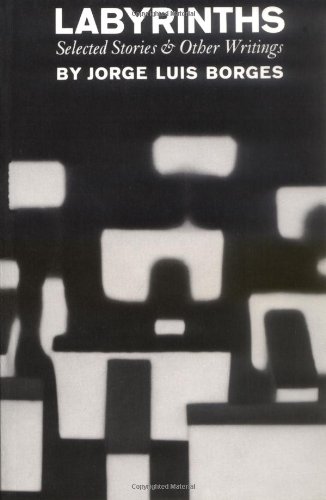
Jorge Luis Borges has composed only small essays and short fictional works. Somebody told me that he is very intelligent and writes in a mathematical style. What? Maths in Fiction! No not maths. Only mathematical style! He was an Argentine by birth and through this book, I was reading him in detail for the first time. I was not let down. His Emma Zunz was the first-ever story that I had read. Not only mathematical, I found his fiction universal and too much symbolic also. Those features are very clear and visible. This book contains some twenty-three short works of fiction and almost ten essays. Essays are also short and precise. There are some short parables in the end.
I began with the Essays first and read the essay titled “The wall and the books”, where he has presented his thoughts on that Chinese emperor who erected the wall of china and ordered to burn all the books that were published before him, to erase the history. He wanted history to start from his reign. Borges has expressed his thoughts on such an emperor and this tendency of burning history. There are some other interesting essays too, “Kafka and his precursors” and ” The mirror of enigmas“. I found them enlightening.
In the short stories, there is such a precision that I can only call it masterly! “Why to take five hundred pages,” he asks ” to develop an idea whose oral demonstration fits into a few minutes.” This statement confirms his attitude and approach both. There are mysteries and detective tales. His metaphysical fiction took me time to get hold of. Borges once claimed that the basic devices of all the fantastic literature are only four in number: the work within the work, the contamination of reality by the dream, the voyage in time, and the double! Aren’t these parameters interesting?
Out of the stories, the first story that I read was “ the Garden of the forking path”. I will call it an interesting philosophical rumination, It’s a riddle and parable and its theme is time. Labyrinth of time!
“The Lottery in Babylon “ was another one that I read, here in an ancient town people play the lottery- lottery. They pay in copper coins and hope to win silver coins in return and it is beautifully written. The narrator comes from a dizzy land where the lottery is the basis of reality. “I have known what the Greeks do not know. Certitude.” The Babylonians threw themselves into the game and those who did not acquire chances were considered pusillanimous, cowardly. Lottery becomes life there, Somebody wrote that this story was an allegory of totalitarianism. Maybe it was, but for me, it was a story of chance and the author played amazingly well with the vehemence of human nature and emotions.
There are other stories and essays that I liked in this book, I am going to revisit Borges again for sure, While reading these stories, especially the above two that I mentioned, the one contemporary author who instantly appeared in my imagination was Orhan Pamuk, because similar traits and philosophical ruminations with the mathematical precision, I had experienced in his books too. There is one thing that I would like to say in the end that though I liked his work in this book for its symbolism, many people may dislike it for the same reason, because If you don’t like such prose, You may find it dull and dreary. For me, the book was a winner.
19th Century 20th Century Adventure Africa American Asia Booker British Literature Children Classic contemporary Crime Detective Drama Essays fantasy French Literature German Literature Gothic Historical Fiction Horror Humor India Indian Literature magical realism Memoir Music Mystery Nature Netgalley Nobel Prize Non Fiction Novel Novella Philosophy Play Poetry Race Romance Russia Russian Literature School Short Stories War Women

 BOOKBROODER