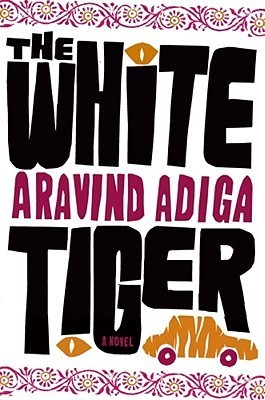
The White Tiger by Aravind Adiga

To begin with, let me tell you first, of my association with this novel. I had never finished any contemporary novel, to put it bluntly, Who cares!..was my attitude towards the contemporary writers, by the time I had bought this novel.

This was my first ever contemporary novel, mainly of an Indian origin author, which I read completely. This had got that year’s Booker and was getting highlighted in the media. I used to think by that time that writers, worthy of reading, were only those, who were either Dickens or Shakespeares’ (I mean only greats of the past). I constantly ignored writers of the present time. I remember I had finished this book quite fast. This book was simple in language but catchy in pace.

When I talk about this book today, I’ll say, it’s a dark novel, without any interesting and exciting story, written in first-person narration, addressing to Chinese Premier. A long monologue, I can say. The theme of the novel is class conflict in an emerging nation, embroidered with evergreen issues of disparity, poverty, and corruption. The narrator of the novel, the protagonist, Balram Halwai, comes from the region of Darkness, He defines India as…

“Please understand your excellency, that India is two countries in one; an India of Light and an India of Darkness. The ocean brings life to my country, every place on the map of India near the ocean is well-off, but river brings the Darkness to India-The black river.”

THE WHITE TIGER

His disliking for the river Ganga is clear from the passage when the body of his dead mother was lying on the pyre at the bank of Ganga in Benaras…

“As then fire ate away the satin, a pale foot jerked out, like a living thing; the toes, which were melting in the heat, began to curl up, offering resistance to what was being done to them, Kusum shoved the foot into the fire, but it would not burn. My heart began to race, My mother was not going to let them destroy her.”

THE WHITE TIGER

Sunday Telegraph said about this book, “Blazingly savage and brilliant”.
I’ll say only blazingly savage but never a brilliant book because being an Indian, I could not really recognize, Balram as someone who was from the region of darkness and deprivation. Like many other readers, I also found his voice and tone superfluous and that of an outsider’s. Otherwise, the book is good and can influence the reader strongly with its flow and pace.

19th Century 20th Century Adventure Africa American Asia Booker British Literature Children Classic contemporary Crime Detective Drama Essays fantasy French Literature German Literature Gothic Historical Fiction Horror Humor India Indian Literature magical realism Memoir Music Mystery Nature Netgalley Nobel Prize Non Fiction Novel Novella Philosophy Play Poetry Race Romance Russia Russian Literature School Short Stories War Women

Good to Great: Why Some Companies Make the Leap… and Others Don’t!

People often ask, “what motivates you to undertake these huge research projects?”
It’s a good question. The answer is “curiosity.”
There is nothing I find more exciting than picking a question that I don’t know the answer to and embarking on a quest for answers. It’s deeply satisfying to climb into the boat, like Lewis and Clark, and head west, saying,” We don’t know what we will find when we get there, but we’ll be sure to let you know when we get back.”

This undaunted curiosity is the stimulus of this work, proclaims the author, in the beginning, justifying why he got down to such a grueling task. Though this book is exclusively for the management students and for the corporate guys, I still feel, this book is very well researched and can be read by them also, who have the least interests in companies and businesses. This book is a result of the hard toil of a large research team of Jim Collins after ‘Built to Last’.If you read it, you will find the reason why millions of copies have been sold of this. Wall Street Journal’s CEO council declared it the best management book they have read.

This book is all about why some companies leap from ‘good to great’ and others don’t!
The first thing it tries to preach is that Good is the enemy of great. Few people attain greatness, in large part because it is just so easy to settle for a good life. Next, the book talks about a kind of ‘Level 5 leadership’,

“Leaders of a paradoxical mix of personal humility and professional will. They are fanatically driven, infected with an incurable need to produce sustainable results. they display workmanlike diligence, more plow horse than show horse. they look out of a window to attribute success to factors other than themselves.

In the subsequent chapters, comes the idea of choosing the right guys. It’s important first getting the right people on the bus (and the wrong people off the bus) and then figure out where to drive it.
Then there is a ‘Stockdale Paradox’ in this book, which is equally applicable in any field of life.

“Retain faith that you will prevail in the end, regardless of the difficulties…..And at the same time ……Confront the most brutal facts of your current reality, whatever they might be.”

There are many other concepts outlined in this book, they look technical, so much business involved in them, but they are quite handy even to the simpler minds, quite comprehensible even to those ordinary mortals like me. The research done for this book may have taken a huge amount of resources, time, and energy, but as a consequence, the major findings and learnings of this project are rather uncomplicated. The key elements of greatness are deceptively simple and straightforward. I feel this book is a wonderful exhibition of undemanding intelligence encrusted with due diligence.

In the end, Even if you think in contrast. If you think you are already gratified by the goodness around you and think after reading the title of this book…..Why greatness? I don’t need that!
Then the book has an answer for you as well. It says it’s almost a nonsense question. If you are engaged in a work that you love and care about, for whatever reason, then the question needs no answer.

The question is not why, but how!

19th Century 20th Century Adventure Africa American Asia Booker British Literature Children Classic contemporary Crime Detective Drama Essays fantasy French Literature German Literature Gothic Historical Fiction Horror Humor India Indian Literature magical realism Memoir Music Mystery Nature Netgalley Nobel Prize Non Fiction Novel Novella Philosophy Play Poetry Race Romance Russia Russian Literature School Short Stories War Women