“How was it that no one had ever told her that it was not love itself, but its treacherous gatekeepers which made the greatest demands on your courage: the panic of acknowledging it; the terror of declaring it; the fear of being rebuffed? Why had no one told her that love’s twin was not hate but cowardice?”
― SEA OF POPPIES
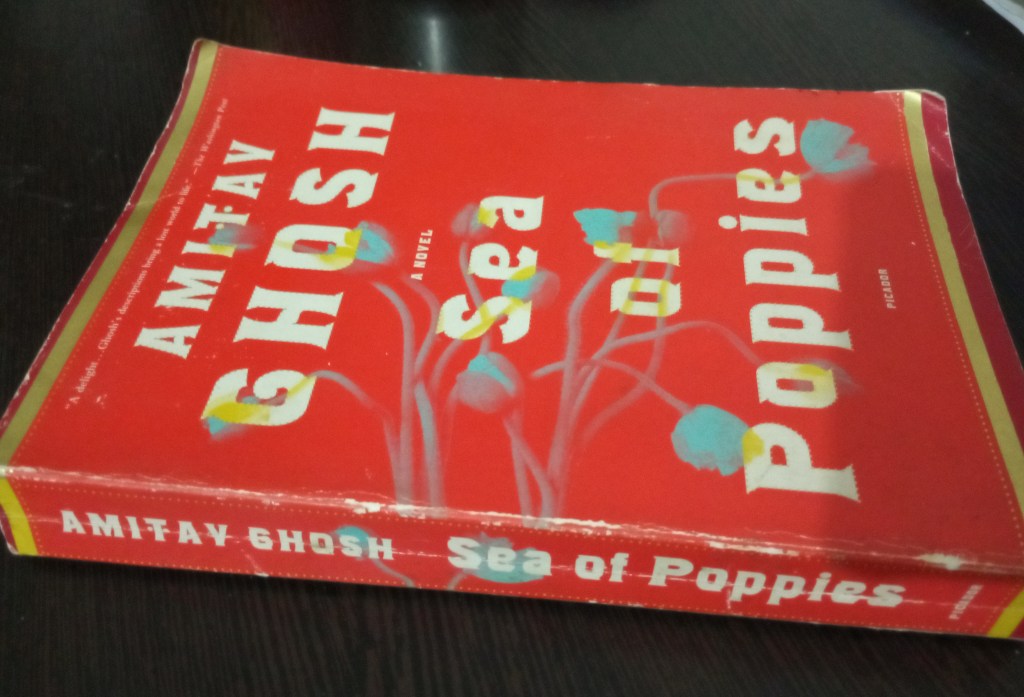
Amitav Ghosh is the internationally bestselling author of many works of fiction and non-fiction. This is the first book of an epic trilogy. The plot is set around the period just before the outbreak of the Opium War in China. There are very interesting characters in the book and they are onboard in the rolling high seas.
I give a high place to Ghosh among contemporary English Authors from India. A saga of a ship, the Ibis, in the Indian Ocean and a beautiful depiction of local characters in a typical Indian way enthralled me and it kept me engaged with its characters and story. This is a sprawling novel and its historical treatment is just wonderful. I am sure, as Ghosh also acknowledges that he has toiled really hard, doing research of this certain historical period from the past. He has masterfully woven the economic hardship and elements of British imperialism of early 19th century India through his characters and scheme of the novel.
This book is very panoramic, vast, and rich in both suspense and satire. The story revolves around the opium trade and encompasses poverty and riches, expectations, and despair in a very drunk language. The imaginative capacities of Ghosh are always marvelous and it completely stands out. And the way he has written his sentences incorporating elements of local languages in this novel thoroughly engrossed me in the plot.
It consists of everything … Love interests, village atrocities, betrayal, voyage, comic scenes, lots of water too, and many more elements.
During village weddings, it was always the women who sang when the bride was torn from her parent’s embrace…Men remain silent..as if they were acknowledging, through their silence that they, as men, had no words to describe the pain of a child who is exiled from home.
SEA OF POPPIES
“How will it pass.
This night of parting?”
A must-read polyphonic saga from Amitav Ghosh!
19th Century 20th Century Adventure Africa American Asia Booker British Literature Children Classic contemporary Crime Detective Drama Essays fantasy French Literature German Literature Gothic Historical Fiction Horror Humor India Indian Literature magical realism Memoir Music Mystery Nature Netgalley Nobel Prize Non Fiction Novel Novella Philosophy Play Poetry Race Romance Russia Russian Literature School Short Stories War Women

 BOOKBROODER