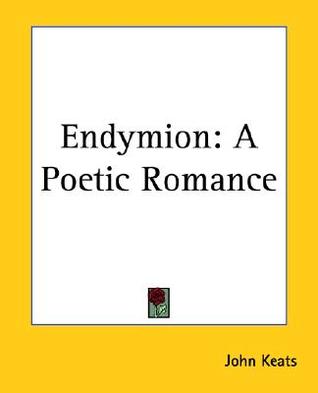
A Poetic Romance of John Keats!

“A thing of beauty is a joy for ever:
It’s loveliness increases; it will never…”

Yes! This is the same epic poem, which starts with these celebrated lines of Keats.

In the spring of 1817, Keats traveled to the Isle of Wight, where he started working on Endymion based on the Greek Legend of Endymion, the shepherded beloved of the Moon goddess Selene. The quarterly review ran him down for the work and denounced his “the Endymion”, this is what they said,

“We confess that we have not read his work, Not that we have been wanting in our duty -far from it- indeed, we have made efforts almost as superhuman as the story itself appears to be to get through it but with the fullest stretch of our perseverance we are forced to confess that we have not been able to struggle beyond the first of the four books….
This author is a copyist of Mr. Hunt; but he is more unintelligible almost as rugged, twice as diffuse, and ten times more tiresome and absurd than his prototype… He cannot indeed write a sentence, but perhaps he may be able to spin a line.”

QUARTERLY REVIEW

Along with Walt Whitman’s ‘Leaves of Grass’, this was my second foray into the classic long poem books, last year. I swooped down on an unforeseeable terrain of epic long poems, like a hungry bird. I was doubtful if I would succeed. But when I finished this long epic poem of Keats last year, which was 130 pages long and consist of four books, I read all of them, all four books, unlike that professional reviewer who did not trouble his soul to read it fully and still reached to a conclusion, shaking the belief of a young poet.
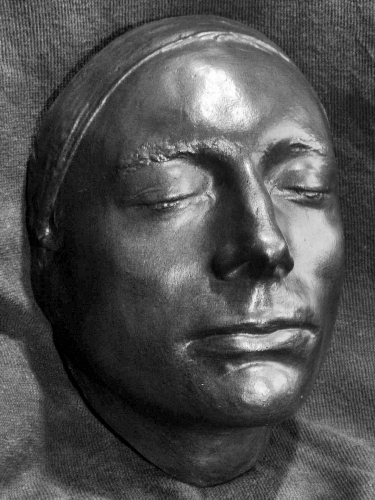
Life mask of Keats by Benjamin Haydon, 1816

I felt bad knowing that Keats was 22 years old when he was writing it and this work should not have deserved such a harsh replication at that time. This should not have been that way, I think. I liked the individual parts of the poems, at some places it is very beautiful and at some places a little disconcerting. But this is also true that I too could not connect myself with this poetic romance fully, first of all, you need to have some knowledge of Greek legends to get things on track, and second, you must like a rhyming pattern that tells a story in verse. First thing I lacked, the second thing I loved.

Yet the structure of the poem was a bit coarse, and its sentimentality was not fully grown, the characters that appeared in the poems looked confusing too. Knowing the characters beforehand will make your life easy. My life was neither easy nor too much burdensome. It was somewhere in between as I have always liked Keats. There are a few places that rang the bell. The melodious tone in the tale reverberated as if a sound echoed from the mountain. Despite its coarseness, I somehow managed to like it.

“Have I been able to endure that voice?
Fair Melody! kind Syren! I’ve no choice;
I must be thy sad servant evermore:
I cannot choose but kneel here and adore.
Alas, I must not think—by Phoebe, no!
Let me not think, soft Angel! shall it be so?
Say, beautifullest, shall I never think?
O thou could’st foster me beyond the brink
Of recollection! make my watchful care
Close up its bloodshot eyes, nor see despair!

“We sit in the mud, my friend, and reach for the stars.”


― Ivan Turgenev


19th Century 20th Century Adventure Africa American Asia Booker British Literature Children Classic contemporary Crime Detective Drama Essays fantasy French Literature German Literature Gothic Historical Fiction Horror Humor India Indian Literature magical realism Memoir Music Mystery Nature Netgalley Nobel Prize Non Fiction Novel Novella Philosophy Play Poetry Race Romance Russia Russian Literature School Short Stories War Women
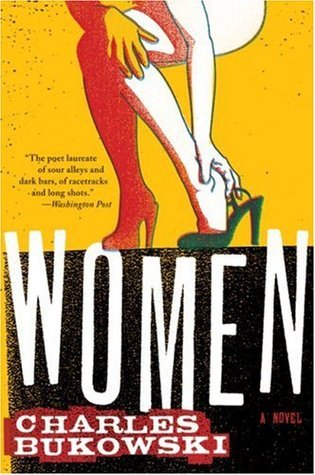
Henry Chinaski and Women!

“No, I only write after it gets dark. I can never write in the day”

The fifty years old man said to Lydia.

When I started reading literature seriously, I was already mature enough. But I knew since a very young age that books get into your mind. As a child, I was a comic book lover. And those comic- heroes used to get into my head; I was behaving like them when I was alone. You should always read good books. That was a piece of advice. I followed it to date.

I think after reading this book, I broke my literary abstinence. I admonished myself. This book was my introduction to Charles Bukowski. I had not heard this name earlier and nobody recommended this book to me. I stumbled across it by chance. And From the very first page, I was welcomed with intemperance. There was no restraint! So much vulgar slang!

I will not recommend this book to anyone. It’s highly adult in content from the very beginning. And it’s monstrous in moral pursuit and licentious in delivery too. There is a lot of dope and booze and lechery all around. Venereal depictions and misogynistic prose are almost on every other page! Repeating the same thing again and again! Alcoholism, dipsomania, and lots of rumpy-pumpy! Only the name of the woman was different. The protagonist Hank Chinaski was the same. This book is porn on paper.

In the beginning, a woman teaches a 50-year-old man the trick, mumbling to herself,

“You can’t teach an old dog new tricks!”

Even in this sort of book, I found a poetic paragraph to share with, you must know that Hank Chinaski is also a poet, apart from alcohol and women he writes poems in between.

“I think you deserve some love”, She said.

“I had a dream about you. I opened your chest like a cabinet. It had doors and when I opened the door as I saw all kinds of soft things inside you- teddy bears, tiny fuzzy animals, all these soft cuddly things. Then I had a dream about this other man. He walked up to me and handed me some pieces of paper. He was a writer. I took the pieces of paper and looked at them and the pieces of paper had cancer. His writing had cancer. I go by my dreams. You deserve some love.”

After finishing the book, (No, not after finishing, I started searching even after the first two chapters) I searched about the author and came to know that he is very popular. People read him and his books are bestsellers. I also came to know that Hank Chinaski is the alter ego of the author. So my stance will be a bit different then.

This novel was published in 1978. He worked in a post office and the moment he left the job there within a short period of time he wrote his first book the title was “post office”. All writers are made by life. They do not become such on their own. Their subject matter is prepared by life and thus they just write, mechanically, unintended, or maybe unemotionally. As Bukowski briefly explained somewhere, that he had one of the two choices – “stay in the post office and go crazy … or stay out and play at writer and starve.” He further clarified that he decided to starve.

Now finally, Though I will remain a dyed-in-the-wool conservative, regarding my mandate on the content of this book, yet I will utter an indispensable fact in the end that will do justice to Charles Bukowski.

The fact is that this man knows how to write a book. Look at those short sentences. He does not use any ornamentation. No complicated word. He says shit a shit. He is honest in a savagely violent way. He does not care about anything. He produces fun. Boisterous merriment. He is too filthy. Repetitive. Afar from my own self-inflicted moral ground. Yet I read the book completely. So those who want to become writers should go and check these capabilities of the author once. He knows how to bind a reader even if he has nothing to offer! 

19th Century 20th Century Adventure Africa American Asia Booker British Literature Children Classic contemporary Crime Detective Drama Essays fantasy French Literature German Literature Gothic Historical Fiction Horror Humor India Indian Literature magical realism Memoir Music Mystery Nature Netgalley Nobel Prize Non Fiction Novel Novella Philosophy Play Poetry Race Romance Russia Russian Literature School Short Stories War Women