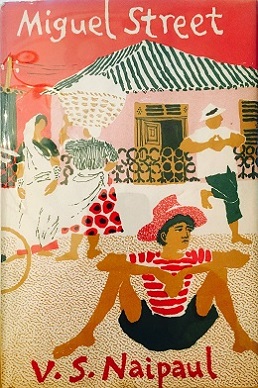
Which one is the most entertaining character in Miguel Street?

I have read Naipaul’s books drenched with fetching travel accounts, especially his African tales. This was my third fiction from the author. Though by the time I am posting my thoughts on this book, I have already read a few more novels and non-fiction by the author. I guess I am getting intimate here. But when I was starting on this book, I was under the impression initially that it will be yet another sort of travelogue-type, but it turned out to be a fictitious short story collection. I am using the word travelogue –type, because I don’t know why, every time I read about the brief of his new book, it gives a sort of ‘predisposed globe-trotting feel’ in my mind. This is an inhabited thing since a young age.

“Look, boys, it ever strike you that the world not real at all? It ever strike you that we have the only mind in the world and you just thinking up everything else? Like me here, having the only mind in the world, and thinking up you people here, thinking up the war and all the houses and the ships and them in the harbour. That ever cross your mind?”

But when I ended the book I even fancied I was perhaps reading a novel. The book had been written in a very distinct style. All the stories are though distinct, in the end, we find that these stories were interconnected. There is a recognizable pattern of relatedness. A common narrator tells the stories of multiple characters in each chapter. All characters are very interesting. If you will read the introduction of each of these characters, there are high chances you will chuckle sometimes and their portrayal in the author’s style is enough to get you to bust a gut. They are laughable. Some of them are as cool as a cucumber.

These characters are flawed and they all live in the same street. ‘Bogart’ is a unique character you will find in the beginning. ‘Popo’, the carpenter is another interesting one. ‘George’ is short and fat and keeps muttering to himself. George briefly runs a brothel of sorts. There was a man called ‘Man-man’, everybody said he was mad. He had some curious habits. He participated in the election every time and always got 3 votes, one was his own but who were the other two? That question remained for long. A character named ‘Big Foot’ was like those dogs, which never bark but look at you through the corner of their eyes. He was big and always silent, his silence scared the people. There is one uncle, ‘Uncle Bhakcu’, who is considered educated. But he is educated not in the book, but in something else. He is called a ‘mechanical genius’.

Men in Miguel Street are considered with high repute if they are adventures. To show their manliness some men take the route of adventure and entertainment to the reader follows. There are a few interesting women characters too in Miguel street, they bring life to the community there. Laura and Miss Hilton are the prominent ones. If I go to the timeline, this was only the third book of Naipaul and written two years later than his first book ‘a mystic masseur’. If I compare it with his first book, the language and both comic sense have been noticed by me, as getting better.

This is a very unique book and I liked the way it has been written. These characters and the comic sense have made this book such an entertaining read, but it also shows the community values and belief in the street. I will call this book a ‘slapstick humor‘. If you are a short story lover, you must try it. I will highly recommend this book to those who have yet not read any fiction of the author, I will say, go with this book first. In my opinion, this is a very charming book with endearing prose.
“We are only as strong as we are united, as weak as we are divided.”

― J.K. Rowling
“If ever my life can be of any use to you, come and claim it.”

― Anton Chekhov
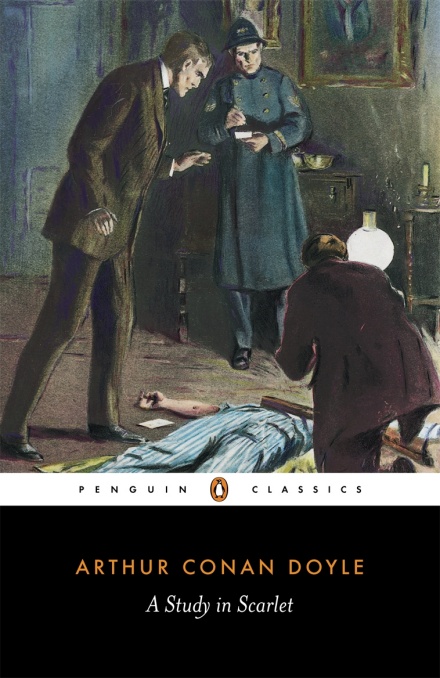
A book written in three weeks, A history created forever! Sherlock Holmes was born.

“What ineffable twaddle!” I cried, slapping a periodical (about Highways length and breadth; state wise in India) down on the sofa, which had been forcefully fed to me just before this book that I am going to talk about now.

I am staying with such people around me nowadays, who feel that if I love reading, they can bring anything on and I will read it. These silly rascals! The close buddies of my salad days; take advantage of my reading habits customarily. Anyway, we have struck the deal for the evening, I will pay for their espresso shots and they will pay for my foams of macchiato. A perfect foggy winter evening plan with old buddies! (Yes it was still winter when I read this book, I am very lazy in posting reviews).

For as long as I remember I am reading the author after four years. Maybe five. This book begins in the usual prototypical style of the author and what can I say about those hard-headed conversations between Holmes and inspectors trying to solve a murder mystery. Just Perfect! Two inspectors who are dealing with this mystery are Lestrade and Gregson. Holmes says Lestrade is a pick of a bad lot and Gregson is the smartest of Scotland Yard.

‘I don’t deny that it is smartly written. It irritates me though. It seems the theories of some arm-chair lounger who deduct all these neat little paradoxes in the seclusion of his study. It is not practical.’

This thing is said by Dr. Watson to Holmes who is sharing the room with him at Baker Street, after reading an article of an unknown author in a magazine. The article mentions how from a drop of water a logical brain can infer the Atlantic without even going there. Holmes says to Watson later it was he who wrote this!

The interesting fact is that author wrote this book in less than three weeks and the Sherlock Holmes was invented in this book. What happened next? There is no need to say anything! The dialectics and argumentations of the plot since the outset were mind-opening. I think anyone can like those small skirmishes, over the logical deductions, among the detectives. They create humor and curiosity both. But the most exciting thing in this book is the second part. While reaching this segment I suddenly felt as if I was reading a Thomas hardy novel, or even at certain places I remembered H. Rider Haggard. A dry wasteland of Utah, and while I was still in the middle of the story, I felt a strong urge to see the places the author was talking about so I opened the maps and stared at those places for long. The Sierra Nevada to Nebraska, Yellow stone river to Colorado those regions of silence and desolation. How could the scene have been in this region in 1847? A question trimmed in my head.

This book first looked like a murder mystery, then like a travelogue, then a love story, and then flashed in the eye of my mind … valley, gorges, hunting, hunters, defiles, boulders, a great extravagance of natural sprawl. It gave me another sort of a reading experience. You will definitely like the love story too! This was interesting for me to know that while the author was going to get glory with his invention of Holmes in this book he had already begun something else. While a study in scarlet was yet to be published and was doing the rounds of the publishers, Doyle has started working on his first so-called “serious” work, a historical novel. During those days a historical novel was considered as a proper work of a serious novelist. That book was about the account of Micah Clarke. The year was 1889.

This book imparted a flawless reading pleasure, but I did not get carried away by the ending so it fell a bit short of full marks for me. Otherwise a great book for Doyle lovers… No doubt!

It was a mild yet efficacious dose of my ‘whodunnit’ in between my longer reads.

I savored both parts of the book in a very good spirit.

19th Century 20th Century Adventure Africa American Asia Booker British Literature Children Classic contemporary Crime Detective Drama Essays fantasy French Literature German Literature Gothic Historical Fiction Horror Humor India Indian Literature magical realism Memoir Music Mystery Nature Netgalley Nobel Prize Non Fiction Novel Novella Philosophy Play Poetry Race Romance Russia Russian Literature School Short Stories War Women