
If I ask you, “It’s naughty weather outside.”. What will you advise me to do? Will you say in a dull tone, ” Pray don’t talk to me about the weather, Mr. Worthing,” in Oscar Wilde’s style, or will you give me an offer to swim tonight on the line of Shakespeare’ King Lear, ” tis a naughty night to swim in.”
I neither know how to swim nor have any plans to talk about the weather. Let’s talk about the ‘beast from the east’ then. What? What did you say? You don’t like beasts! And you have chionophobia. Cryophobia too. Oh my god, how many phobias do you have? I pray you do not have iridophobia. Who on this planet can have iridophobia? Oh! I see that it is raining outside in your area. It is nice to know that, but what is happening exactly? Is it just a ‘fiss’? or ‘daggle’? or is it a ‘gosling blast’? Ok, tell me, what will happen if a ‘cat’s nose’ hits you on your head? How much harm will it incur? Nothing. It will just tickle. Are you saying this? No, you are wrong. Give me a penny as a punishment for the wrong answer.
What is all this nonsense? Ok. Give me some time. Just hold on. Stay mum for a while. Let me explain. ‘Beast from the East’ was when an anticyclone brought plenty of snow and stiff wind from the eastern landmass to Britain. ‘Chionophobia’ is fear of snow, ‘Cryophobia’ is fear of cold, ‘Iridophobia’ is fear of rainbows. ‘fiss’ is drizzle, ‘daggle’ is torrential rain, and ‘gossling blast’ is sudden rain. ‘Cat’s nose’ is a powerful cool, dry wind from the north west. It can take you to your doctor’s place if you expose your head to it too much. It will not just tickle.
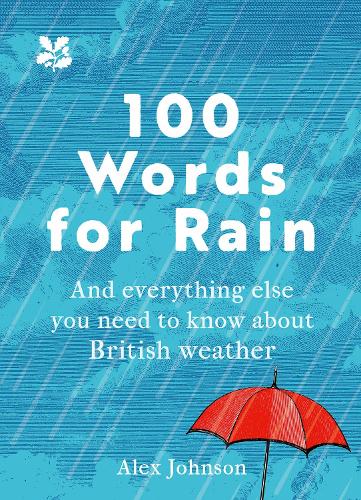
I learned all this from this book. How was it? Am I not a bit smarter now ?
The book talks about the British weather—about the wind, rain, snow, hailstorms, and anything about the weather. The interesting thing about the book is that it not only provides the information and meaning of the words, like a lexicon, rather, it mentions so many literary pieces with colourful illustrations of novels and classic works where such weather related settings in the plot were present. In 14 chapters, it deals with everything around British weather.
A book for students, researchers, weather or science enthusiasts, and a logophile, the book is a small treasure. For a general reader, it was no less than a refreshing experience, as it evokes the memory of school days spent learning new things. I recommend this book, and I thank NetGalley and publishers for an advanced copy.
There is folklore in Ireland that the pig can see the wind, There is a mention of the poem Don Juan in the book, and here it is
“Medals, rank, ribands, lace, embroidery, scarlet,
Are things immortal to immortal man,
As purple to the Babylonian harlot:
An uniform to boys is like a fan
To women; there is scarce a crimson varlet
But deems himself the first in Glory’s van.
But Glory’s glory; and if you would find
What that is — ask the pig who sees the wind!”
Ok, a few more words from the book: Petrichor‘ is the smell of the rain, especially when it falls on dry ground. Once, a skelf fell on my shoulder when I was 10; next year, one day, I twirled my head in that feefle. ‘skelf’ is a large snowflake; ‘feefle’ is swirling snow. Thank you.
19th Century 20th Century Adventure Africa American Asia Booker British Literature Children Classic contemporary Crime Detective Drama Essays fantasy French Literature German Literature Gothic Historical Fiction Horror Humor India Indian Literature magical realism Memoir Music Mystery Nature Netgalley Nobel Prize Non Fiction Novel Novella Philosophy Play Poetry Race Romance Russia Russian Literature School Short Stories War Women

 BOOKBROODER