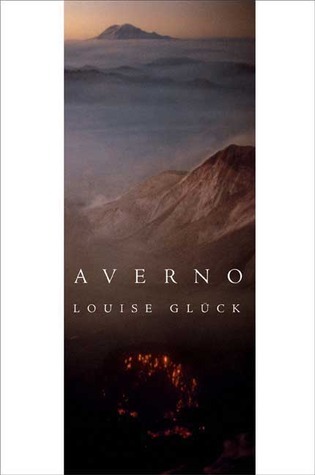
Averno: an intense collection of passionate verses

“The brightness of the day becomes

The brightness of the night

The fire becomes the mirror.”

AVERNO

Averno,
There was a lake in a distant country. And an author got inspired by it. I can say such at most. A distant country, if I roughly guess; this small Crater Lake must be at least six thousand kilometers away from my study. While people around this lake must be expecting or relishing a Mediterranean winter right now, I hope not so cold one, I am sitting around 14 degrees outside my room, intermittently rubbing my hands while typing. Inside the room, the mercury plummets a bit sharp in the capital, at least in my case sometimes! You must know this fact that this lake Averno, was regarded by the ancient Romans as an entrance to the underworld.

I started reading this book on one starry night when there was so much light outside even at night and I knocked it off quick, without searching hither and thither; if I put it together there was no procrastination. This Nobel award-winning author pushed me from pillar to post in her craft in a very fruit-bearing manner, as if just in a moment I traveled the whole world of the verse-maker, entering through an alcove of novelty. Though I did not reach any underworld like Romans; yet this book was the world of gravitas for me.

Such simple and intense was the writing. And such a profound piece of solemnity in verse!
Even if I did not get impressed by the structure of the poems most of the time yet I reckon, I have not read too simple and yet too intense as this book lately in poetic form. I was reading her for the first time after her name was set forth in the list of Nobel laureates.

The book is in two parts, the first one with six titles and the second one with eleven titles. Somewhere you will find the poetry of life and death and at times it can leave you on thin ice, you must take care of your own, the precariousness of life and certitude of death takes you to the truth- line of reality and you have to bear it.

She has written about change, she says balm after violence makes no effect to her as violence has changed her.

“Summer after summer has ended Balm after violence;

It does me no good

To be good to me now

Violence has changed me”

At one place she remembers the music of falling snow from her open window, and she sings,

This is the light of autumn, not the light of spring

The light of autumn: you will not be spared.

You will not be spared,

nor what you love be spared.

She ponders over the beauty outside and her helplessness to enjoy it.

“It is true there is not enough beauty in the world

It is also true that I am not competent to restore it.

Neither is there candor, and here I may be of some use.”

She asserts something and then leaves a question to the reader,

“My friend the earth is bitter

I think Sunlight has failed her

Bitter or weary it is hard to say.”

There is a poem on the goddess queen of the underworld, PERSEPHONE, she has compared her behavior with the modern girls when she went to hell and returned to earth. She talks about life and death, here you will see verses about her soul, she talks to her soul, and you can hear that intense and mild note of her whispering. The sound of such intensified conversations with the self can even blare sometimes. She has written about her mother, sister, and father. Her thoughts embrace nature and landscape. She undulates between the Past and future and talks about the time governed by contradictions in a febrile tone. In a poem, a young girl set the fire to the field of wheat. And She fell asleep in a river and what a wonderful manner the entire scene has been done in verse.

I have adored this book for its intensity and Touch!

19th Century 20th Century Adventure Africa American Asia Booker British Literature Children Classic contemporary Crime Detective Drama Essays fantasy French Literature German Literature Gothic Historical Fiction Horror Humor India Indian Literature magical realism Memoir Music Mystery Nature Netgalley Nobel Prize Non Fiction Novel Novella Philosophy Play Poetry Race Romance Russia Russian Literature School Short Stories War Women
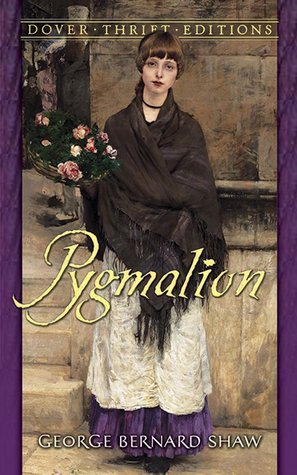
A book that invoked a forgotten Pygmalion in me !

Pygmalion was an ancient Greek legend, who was a sculptor and a king. He fell in love with ivory statue of his own ideal woman. He prayed. In response to his prayer, the Goddess gave life to the statue and then the king married it.

This much of information was sufficient for me to know why the title of this book was chosen by G.B. Shaw, Pygmalion. I very much liked the character of Mr. Higgins in the play. He is a professor and scientist of phonetics and very confident about his knowledge and acumen.

While reading the book I realized that everyone is like Pygmalion. Everyone likes and adores whatever is created by him or her. Three years old daughter of my neighbor first makes a bridge from the cards and then claps and laughs seeing it, and during this spree when someone breaks it or it is shattered by the wind, she weeps. She perhaps loves her creation. Though momentary, she expresses the feelings of love and pain with a unique sort of fervor to those childish maneuvers and efforts. I too was probably like Pygmalion when I was a kid, but unlike this small daughter of my neighbor, I did not feel pain when one day my creation was destroyed!

My creation was a cat made up of snow. When one day there occurred, an event of very heavy snowfall, all houses and trees were covered with the white sheet of snow and remained covered for a few days. I made a sculpture of a cat out of that snow, just outside the window of my room. It was not a replica of a cat, In fact, it looked like a small cow, a bit bulky in size and a bit distorted but still it was a cat for me and I had placed a few whiskers of string on its front bulging shape, which according to me was the mouth of my cat, and I inserted two small round glass shooters, a few inches above those whiskers to make them look like eyes of my cat. This awkward-looking cat remained there just outside the window of my room for two days possibly. There was not at all sunshine for two days. The temperature was below zero and the snow did not melt. I kept watching my cat again and again and adored its ludicrous shape during those two days.

Then the third day Sun shone with all its brilliance and in the very morning time itself, my cat melted away and disappeared. But I did not feel bad as I knew by that time if the snow would be there again, I would recreate my cat again. However, in that season, there was no snowfall again. And in the next season, I was one year older and the Pygmalion within me was now matured enough to make other kinds of creations!
I am talking about all this rubbish because these two events just flashed over my mind when I was reading this play. The character of Prof Higgins was very much like me when I was a kid …. Overconfident and heartless!

I read this book for the first time and this was a wonderful experience. Then I watched the 1938 movie of Leslie Howard as Professor Henry Higgins and Wendy Hiller as Eliza Doolittle and this movie extraordinarily complemented my experience of reading the book.
What a fine movie and wonderful acting by its cast!
The only difference between the play and the movie was its ending. Shaw kept his play realistic but there is a different ending in the movie, there might have been commercial reasons behind this change!

Coming back to the book, there are 5 acts in this play. The beginning of this play is so sweet. Thunders and then rain. People rushing into the shelters…. closing a dripping umbrella… in the street. A street flower girl calling the name of a young man and a mother and daughter asking the street flower girl….

“Now tell me how you know that young gentleman’s name?”

Prof. Higgins, a scientist of phonetics, takes a challenge that he will be able to transform the cockney-speaking Covent Garden flower girl, Eliza Doolittle, into a woman as poised and well-spoken as a duchess. He meets his challenge wonderfully.

“There are such fools that they think style comes by nature to people in their position, and so they never learn. There is always something professional about doing a thing superlatively well.”

Higgins is so obsessed with his work and knowledge that he hardly appreciates anything else, whether they are emotions or other trivial felicities of our surroundings. When Liza feels something for him and he denies her. She feels let down.

Liza: what did you do it for if you didn’t care for me?

Higgins: Why, because it was my job.

Liza: you never thought of the trouble it would make for me.

Higgins: Would the world ever have been made if its maker had been afraid of making trouble. There is only one way of escaping trouble, and that’s killing things. Cowards, you notice, are always shrieking to have troublesome people killed.

Probably many people are already familiar with the story and they have seen many movies based on the play, but for me, this was the first time. Even in my school days, I missed this book, so a highly satisfying read for me.

This enriched me on many levels. I am quenched!

19th Century 20th Century Adventure Africa American Asia Booker British Literature Children Classic contemporary Crime Detective Drama Essays fantasy French Literature German Literature Gothic Historical Fiction Horror Humor India Indian Literature magical realism Memoir Music Mystery Nature Netgalley Nobel Prize Non Fiction Novel Novella Philosophy Play Poetry Race Romance Russia Russian Literature School Short Stories War Women