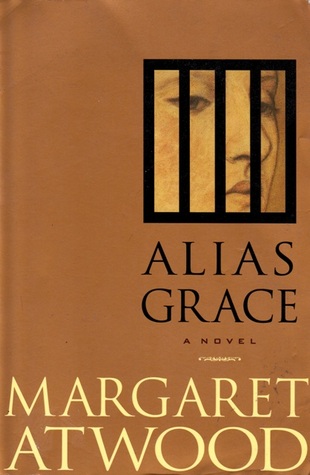
A story that was narrated from a jagged edge: Margaret Atwood’s Alias Grace

It was the beginning of the winter that year, I had felt the fresh frost on my windowpane that morning and in the night I had just finished Alias Grace! Meanwhile, the news came from the book world that the jury broke the rule and now there are two books that can be read this year with the same tag of Booker prize winner 2019 on them. Peter Florence, the chair of the five-member judging panel of Booker prize said, “The more we talked about them, the more we found we loved them both so much we wanted them both to win.” What can be a better time than this to say something about a book of Margaret Atwood, when she once more bagged this prize with Evaristo and also became the oldest ever Booker prize winner!

So here is this book… Alias Grace….. a unique one! Till the end of this book, I was not mindful of the fact that this book was based on a true historical case of the 1840s. I was reading the entire work with a pure sense of fictional work. When I got there towards the end of this tale my indignation could be explained as of a reader who was trying hard to know the suspense behind the tale but then the book finished and there came an afterword from the author stating this…

“Alias Grace is a work of fiction, although it is based on reality. Its central figure, Grace Marks, was one of the most notorious Canadian women of 1840s, having been convicted of murder at the age of sixteen.”

However, this superficial rage lasted in me just for a few minutes after finishing the novel and then my overall reading experience of this book brought me back into normalcy. And once the normalcy was restored, I once again felt the immense delight of reading this tale. Only an astute and highly proficient author can do this…converting a well-known and highly publicized real story into a magnificent fictional work…such wonderful storytelling and a deft art of narration.

Grace Marks came to a township of Toronto from Northern Ireland with her father and with her four brothers and four sisters when she was 13 and there she worked for 3 years as a servant and then at the age of 16 got convicted of murders, and then for the next many many years spending her youth in a penitentiary, she remained one of the most celebrated murderesses of her time. Some called her an accomplished actress and a most practiced liar, considering her a sham. Others felt she was innocent and sane assuming that at such a tender age she could not commit those heinous crimes. A doctor from Massachusetts Dr. Simon Jordon comes to understand her case after sixteen years. She tells her story and this doctor of her age writes down it with great observation and precaution.

She tells and observes him. He listens and infers her.

While he writes I feel as if he is drawing me; or not drawing me, drawing on me – drawing on my skin- not with the pencil he is using but with the old-fashioned goose pen, and not with the quill end but with the feather end. As if hundreds of butterflies settled all over my face, and are softly opening and closing their wings.

ALIAS GRACE

This way Atwood narrates the story of Grace Marks through these two characters in an alluring manner. This book is a classic example of class conflict, lust, the complicacy of a trial, and psychic battles within humans. I enjoyed every part of the book. Dr. Simon’s parallel story with all his desire-driven thoughts gives a holistic fictional sense to this book.

You will find so many things here! There is a panoramic sea voyage here, scullery maids and servant girls with their lives and emotions, a portrayal of fear in the upper class of rebellion that had occurred there during that period. An emotional relation between Grace and her friend Mary Whitney is there. There are morose and churlish characters, an interesting paddler, unsolicited relations between the upper-class employer and lower-class worker. The poetry of Atwood reflects through characters as well. Jamie Walsh, an interesting character plays sometimes songs upon his flute:

“Tom, Tom, The piper’s son,
Stole a pig and away he run,
And all the tune that he could play
Was over the hills and far away”

ALIAS GRACE

If you are an Atwood fan and even if you have read her other great works still you cannot miss this book at all!

19th Century 20th Century Adventure Africa American Asia Booker British Literature Children Classic contemporary Crime Detective Drama Essays fantasy French Literature German Literature Gothic Historical Fiction Horror Humor India Indian Literature magical realism Memoir Music Mystery Nature Netgalley Nobel Prize Non Fiction Novel Novella Philosophy Play Poetry Race Romance Russia Russian Literature School Short Stories War Women
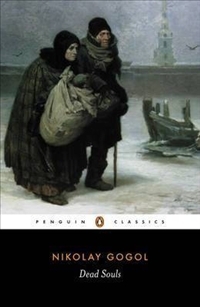
Who wrote dead souls? An eccentric genius or an intelligent queer!

“The longer and more carefully we look at a funny story, the sadder it becomes.”

-NIKOLAI GOGOL

Before saying anything else, I think I must begin with my association with this novel. It was that period of my age, years and years ago when I had read only a few books, most of them incomplete, yet I used to impress my friends with that precocious intelligence I gathered from those books devoured by me in such scanty doses. And what about my knowledge of Russian literature then?… That was extraordinarily abundant even at that time. Was that a joke?… Indeed… it was! If you had asked me to name any two authors of Russia then, I would have said the first name in a very confident tone… ‘Tolstoy’… and second name, after a pause of a few seconds, I could have uttered aforementioned in full, with little more dignity… ‘The Leo Tolstoy’.

Yes! That is true. I was not aware of any other name. What a pity! No. I was like an infant still swinging in my cradle of innocent ignorance as long as the book reading was concerned. I was a newbie. After some time when I started reading contemporary authors. I was reading a book by Jhumpa Lahiri. There, for the first time, I encountered this unique name… GOGOL…Jhumpa had created a fictitious character there in her plot whose name was Gogol. I thought then that she might have been inspired by the modern-day ‘Google’. However somewhere in between, she described the Gogol as someone like this as far as I remember, “an eccentric genius, an intelligent queer and sickly creature, a hypochondriac and a deeply paranoid, morbidly melancholic… one among Russian literary greats”

So, Jhumpa was decidedly the one who introduced me to the second name from the Russian Literary world many years back…GOGOL… Since then I wanted to read this fellow. I had notified Gogol and his Dead Souls in excitement then. It seems a silly association but it is quite true. Before turning to Dead souls finally, I had already read him three years back in his short tales, The Nose and The Overcoat. I loved both of them.

Now coming back to the Book, you can instantly see that I was reading this book with very high expectations and enthusiasm. Did this book meet my expectations? I’ll first say YES. And then I’ll say NO as well. Actually, this book had two parts. In the first part, I loved everything whatsoever was written by Gogol there. But in the second part, I’ll say my excitement just perished in a very unusual way. It ended flat from the point of view of the story, leaving me disconcerting and a little disappointed as well. So this book just fell short of a five-star read for me.

The storyline is rather simple. A clever man is trying to make wealth through tricks and hoaxes. He is using the officials. Corruption practices among those officeholders made his fraud of buying and selling those dead souls quite convenient. Dead souls were those serfs who were dead but they were still shown as living ones in the census there on paper. So this guy used all his brain to acquire a huge sum of money through the deed of sale of such dead souls.

Our hero, the hero of this novel, as is defined in the beginning, is a peripatetic rouge and is very solicitous about his descendants. Our hero is a traveler but his travel is of a different sort. One day our hero CHICHIKOV enters the provincial city of N. Gogol has constantly used this term ‘our hero’ everywhere in the narration, whenever he had a strong intent to peep out in between the storyline and wanted to talk to the reader directly, this ‘our hero’ of Gogol, though acts throughout the book villainously. He entered in style on a pretty brichka (a type of horse-drawn carriage) and entered the gate of a hostelry in this city…And thus began his journey in this novel Dead souls.

Every chapter of this book brings to the reader a unique character and an entirely new backdrop from Russian society. A scene changes every time a chapter finishes. Chichikov either deliberately reaches there or lands up there accidentally. And here in every chapter of this novel especially in the first part, Gogol has shown the class of his penmanship in framing such humorous circumstances and very sharp observations of Russian people and their behavior. And I really liked all the characters created by Gogol in this book. The humor content is at its best and the conversations and Gogol’s delibrations on various issues of Russia can be seen in a new light.

“But wise is the man who disdains no character, but with a searching glance explores him to the root and cause of all.”

GOGOL

These FOUR things I noticed throughout the book. You will find here DIVERSITY of Russian classes and characters, then you will witness the DRAMA among the characters in the satirical language of Gogol, the dialogues and narration will fill you with unstoppable jest in that classic Gogolian HUMOR, and finally, a big-time SUSPENSE will linger on every time there.

So, Diversity, Drama, Humor, and Suspense are my four takeaways from this novel.

This is for sure a great classic book and is quite strange and queer in its approach and scope both, and one must read it if one is interested in peeking into the Russian ways of the 19th century through the eyes and style of Gogol. Nabokov had once described Gogol as “the strangest prose-poet Russia ever produced” and I too have felt this strangeness of his craft in this novel.

19th Century 20th Century Adventure Africa American Asia Booker British Literature Children Classic contemporary Crime Detective Drama Essays fantasy French Literature German Literature Gothic Historical Fiction Horror Humor India Indian Literature magical realism Memoir Music Mystery Nature Netgalley Nobel Prize Non Fiction Novel Novella Philosophy Play Poetry Race Romance Russia Russian Literature School Short Stories War Women