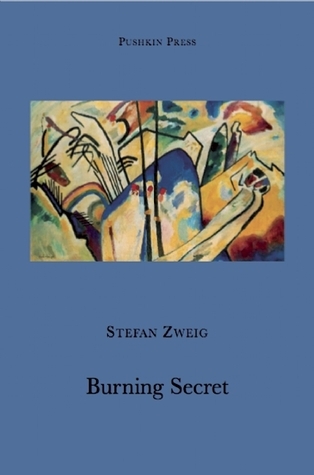
This burning secret burnt me at last. But then it also rubbed ice in the form of a lifelike innocence of a little child onto my burning wounds. What a way of telling a tale!
I was reading this author for the first time and he impressed me right away. I’ll very highly regard the way this story has taken me to the end. Though, there was the suspense that was created by the author in a very latent manner at the outset yet the vagueness of this suspense was undoubtedly obvious.
This is the story of a young man, a baron, with a handsome face, who was always prepared for a new experience. The ready-made word “woman – hunter” was used for him by the author. this guy is always loaded with passion, not with the passion of a lover, but with the cold, calculating, dangerous passion of a gambler. He comes to a hotel to spend his vacation and there he meets a tall woman and a small boy. Mother and son. He makes a quick friendship with the child, though his wicked gaze remains fixed on the mother. In a very shameful manner, this guy extracts those family secrets from the unsuspecting child.
Will he be able to achieve his wicked intentions? what was really his purpose? this is the burning secret. read it you can find it out.
But, here is something else the author has done. This story is not really about the baron and that mother. In fact, this story is the story of that child. A child… 12 years old. His name is Edgar. He is not an adult, he is not a child too. He is something in between. He has a child-like innocence and his unsuspecting innocence was cleverly used by the baron. The psychology of the mind of this child has been written by the author in a very cherubic language and I think that is the most fetching and delectable part of this book.
Befriended with the baron, in the beginning, it gives this child a feeling of importance and he feels like a grown-up, but when in the presence of baron his mother ignores and rebukes him and asks him to go to bed, he gets angry and thinks that his mother is trying to make him look small in front of his friend.
“Why did she do it? why did she always want to set him down as a child when he was convinced he was no longer a child? evidently, she was jealous of his friend and was planning to get him all to herself. Yes, that was it, and it was she who had purposely led the baron the wrong way.“
This child’s constant fight with his own inner self has been portrayed so well. After the change in behavior of his mother and the baron both toward him, he constantly keeps asking himself questions. why they don’t behave with me the way they did at first? why does mamma avoid my eyes when I look at her? why their faces even seem different? could I have said anything to annoy them?
He further took some dauntless decisions and his actions were far bigger than that of a 12-year-old child, to protect his mother from the evil intentions of the baron but… was there really an evil intention at all? the element of suspense remains there till the end.
I must say that I loved the way this story has been written and it is a unique one. I have not read anything of this sort so far. I came to know that Zweig had a connection with Sigmund Freud and they interchanged so many ideas. I can understand the source of such wonderful psychoanalysis in this book. So this story turned out to be a very good starting point for me to explore more of Zweig in the future.
19th Century 20th Century Adventure Africa American Asia Booker British Literature Children Classic contemporary Crime Detective Drama Essays fantasy French Literature German Literature Gothic Historical Fiction Horror Humor India Indian Literature magical realism Memoir Music Mystery Nature Netgalley Nobel Prize Non Fiction Novel Novella Philosophy Play Poetry Race Romance Russia Russian Literature School Short Stories War Women
 BOOKBROODER