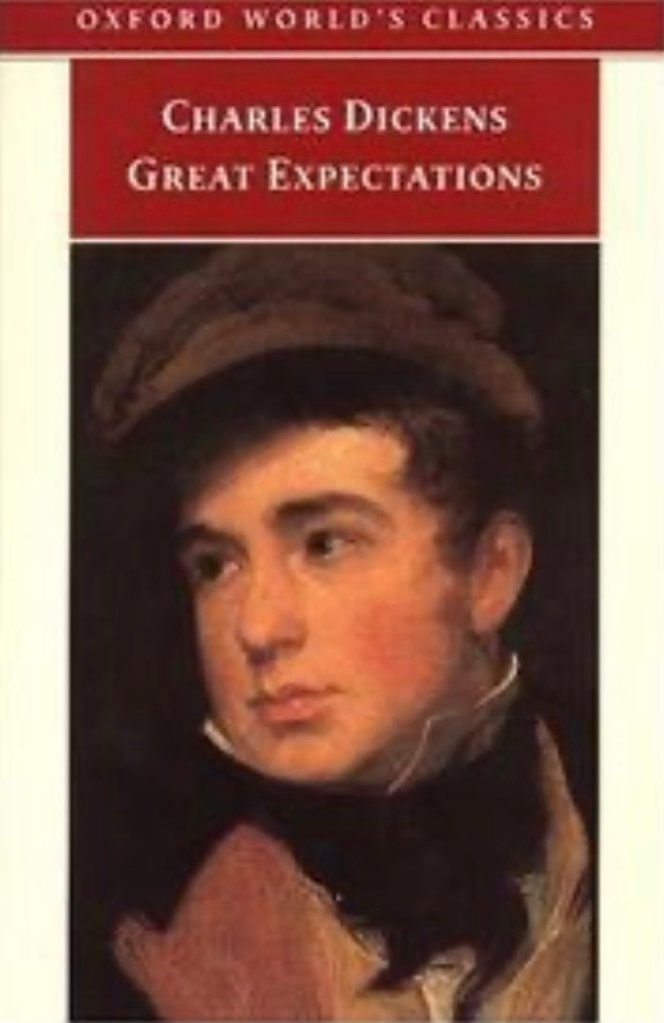
DICKENS: Great Expectations

Great expectation was my first book of Dickens. Years ago when I read it, I could not possibly understand its importance from the perspective of social injustice and class conflict of that time. I remembered that initial self-introduction of a young boy, where he talked about his family names and discussed why he preferred himself to be called Pip and not Philip.

I still had a fresh picture of how one day suddenly Pip encountered that fearful man, who was soaked in water, and smothered in mud, and lamed by stones, and stung by nettles. Who limped, shivered, glared and growled and cried in a terrible voice…

“Keep still, You little devil, or I’ll cut your throat!”

Another image that was still persisting in my mind was that of Miss Havisham, who lived in a dilapidated house. Where in dreary room, which was faintly lighted by candles, speckled legged spiders running home on that table cloth darkened with black fungus, mice rattling behind the panels, and she with a hand upon Pip’s shoulder, leaning on her crutch headed stick, pointing to that big table saying …

“This is where I will be laid when I am dead. They shall come and look me here.”

I reread it, to recall what else had happened in Pip’s life, which I had partially forgotten. This time I could feel this dramatic work of Dickens with some maturity and totality. I could feel the constant inner struggle of Pip with his own conscience. Pip was ambitious and he constantly tried to become a gentleman. His purpose was to impress a young noble girl, Estella.

In fact, I grew with this story this time; I understood and reckoned many new themes. Themes of crime, class conflict, ambition, and guilt were more clearly comprehended by me. The imagery of Dickens has created some eternal and timeless characters in this book. I truly adored and approved this story yet again.

It just sprawled and quivered into me!

“I took her hand in mine, and we went out of the ruined place; and, as the morning mists had risen long ago when I first left the forge, so, the evening mists were rising now, and in all the broad expanse of tranquil light they showed to me, I saw no shadow of another parting from her.”

19th Century 20th Century Adventure Africa American Asia Booker British Literature Children Classic contemporary Crime Detective Drama Essays fantasy French Literature German Literature Gothic Historical Fiction Horror Humor India Indian Literature magical realism Memoir Music Mystery Nature Netgalley Nobel Prize Non Fiction Novel Novella Philosophy Play Poetry Race Romance Russia Russian Literature School Short Stories War Women
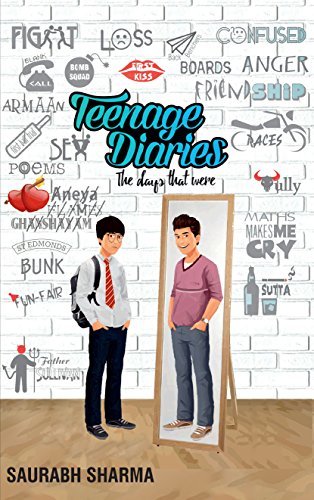
TEENAGE DIARIES: The Days That Were by Saurabh Sharma

What is so special about teen age? Why do we recall this period of life more than any other time of our life? Will I cherish my teen age memories with same fervor when I will turn sixty?

All these questions were emanating from within me when I was reading this first-person narration of Ghanshyam, the narrator of this “Teenage Diaries: The days that were.”

While reading this I contemplated two virtues that are usually carried forward from our childhood to our adolescence; first, ‘dreams unfilled with fear ‘ and second, ‘Ignorance filled with innocence’. Somehow during those very fragile and flimsy years of teenage, our dreams get elements of fear, probably for the first time, facing the scratchy surface of reality and the wisdom of newborn adult fantasies perhaps smashes our innocent ignorance. We move to an obscured slippery path, stumble there, slide there, fall badly sometimes, come out strongly some other time. This way, on completing this period, on the verge of teenage, we become wiser….Or probably we remain foolish !… Yes?….No?….I really don’t know!

This book portrays the same thing. Nothing new!
It’s about teenage crushes, breakups, funfairs, school friendships, fights, study, board exams, first kisses, first physical intimacies, family expectations, and everything that happens in the life of a teenager everywhere. What else can you find in teenage diaries? …but it also includes a little glamour and sadness towards the end which is not usually common in all such teenage lives.

Ghanshyam born and brought up in Baroda will take you to his teenage world with all the possible silliness and fantasies. He hates his stereotype name, Ghanshyam and, when one day, a group of four inebriated retards, try to barge into his friend’s group, he becomes heroic for the first time by thrashing them away. This begins his transformation from Ghanshyam to GK, from a nerd to a stud, from a shy and diffident guy to a bold and confident one. Then the story moves most of the time, on a predictable path.

But there is something here to talk about…And that something is an exquisite first-person narration opted by the author. For me, as a reader, this was an ameliorating part of this book that kept me engaged to a simple storyline. This narration style creates a smooth and floating base for the high rising melodrama-building of those adolescent fantasies.

With this opening, Ghanshyam (a small tad clung to his dad here) begins his story…

“Olle, Olle! What are you doingg ??” My neighbor’s screeching voice bombarded my eardrums.

Snuggled up in my dad’s lap, I opened my droopy eyes. It was difficult not to fall asleep with dad’s mind numbing humming in the backdrop. Though my dad’s humming was a lazy indianize lullaby that I had grown to dread, I was vexed at being jolted out of my sixth slumber of the day.

‘I’m sleeping, you moron! And why the fuck are you making this monkey face?’ I thought.

TEENAGE DIARIES

And throughout the book, this narrator has been able to converse with the reader and that is the most important part. His storytelling does not become dull and wearisome. Chapters are well connected. Conversation and expository segments in the book are nicely written. For such nice writing and for beautiful sentence formation at many places, I will truly appreciate this young author. The author definitely deserves a high rating for his debut novel for writing such captivating prose.

The other thing, I noticed is those ‘inner dialogues’ written by the author. The narrator speaks to himself. He hears it and the reader hears it, but other characters in the book have no idea what’s going on in his head. Those moments make your reading experience even more palpable and engaging.

So, It’s a well-presented teenage diary by a talented young author!

“Achieving something that we have worked hard for, makes us feel rewarded, but the dampener is that after a momentary realization of our awesomeness, it demands us to work hard again. On the contrary, happy accidents invariably make us feel ceaselessly ecstatic. Though we establish a causal relationship for that serendipity berry that has fallen from the heaven and landed in our lap by calling it karma and what not, deep inside we know that we just got bloody lucky.”

19th Century 20th Century Adventure Africa American Asia Booker British Literature Children Classic contemporary Crime Detective Drama Essays fantasy French Literature German Literature Gothic Historical Fiction Horror Humor India Indian Literature magical realism Memoir Music Mystery Nature Netgalley Nobel Prize Non Fiction Novel Novella Philosophy Play Poetry Race Romance Russia Russian Literature School Short Stories War Women