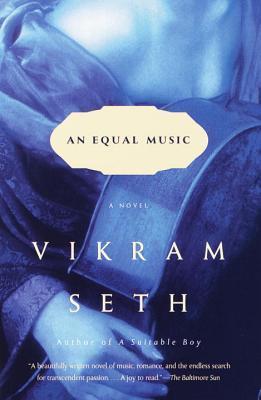
A QUINTET is a group of five people creating music together. The quartet is for four. Have you ever enjoyed Beethoven Quartet? Let’s play one of the quartets of Haydn’s opus 64. Let’s zip along quite merrily. A bit faster.
“I am the trout, the angler, the brook, the observer. I play it in B, in A, in E-flat. Schubert does not object.”
AN EQUAL MUSIC
Let’s play the viola guys in a hope that the music that it will produce will be equal in all measures. Let its pitch, loudness, tone, and tenor all remain unperturbed and isotropic. Let’s hum all the time. Let’s talk about so many V’s… Violin, Viola, Vienna, Venice! Let’s place a big bowl of potpourri in the middle of the room on that ligneous table, to assail your senses. The fragrance will get on you with more syrupy intoxication in such a lovely musical milieu. I am creating a musical air in bookish terminology.
He was a student in Vienna ten years ago, his name is Michael. He is a violinist and he was in love with Julia, she was a pianist. Their paths departed, she got married to someone else and after ten years enters into the life of Michael once again. A musical note that was left unfinished earlier, they try to carry through it together euphoniously once again. That’s it. A patchy and sketchy love affair and too much music!
Vikram Seth is a sublime writer, his writing style is divergent and dissimilar to others especially in this book. Vikram Seth is famous for his ‘A Suitable boy’ and for his poetry too. I have read him in parts. I have read some of his poems too. ‘An equal music’ was my first full-fledged work of the author. I found his flow very captivating and it was not unimpaired at any moment. This prose is lyrical and his short sentences are imposing in their own senses. Yet the colossal trouble encrusted upon my emotional layers by this story was that though I knew what was happening, yet I could not really visualize them properly. My lack of dreaming up was due to the technicalities involved there in the prose. The prose has used so many technical words associated with music and musician, specifically of European Classical music. Their abundant usage turned out to be too much for a general reader. The conversations and dialogues of the book are good and generic, at many places the author has also evoked mood and setting very emphatically with his poetic touch and I have a soft spot for those parts.
But as a whole, this book failed for me on two major fronts, first, it’s too technical, the cry from the aforementioned paragraph above will continue, and second the emotional pitch. In the background an ostensible love story was going on, it was shallow, mechanical, and monotonous both in an emotional and cerebral manner. Its psychic quotient unwillingly got truncated for me. It may not be the case for others but I felt such all the time.
If you love music and know what all these musical technicalities mean, I am sure you will enjoy this book very much. The musical circle has highly appreciated the author for his accurate and veracious description of the understanding of music. But if you are like me who does not know the meaning of all these words yet you do not hate to keep referring to your age-old, half-torn, fully-faded lexicon (like the antique one I have, even in this digital era), you can use your common sense to get proper connotations of whatever was performed by some enthusiastic groups of artists in their respective field, I hope you can like it. I must intimate you in advance that a love story going on in the backdrop initially looked regular and ordinary, and very repetitive in occurrence, yet in the latter part, there is a unique revelation ready to blow you off.
Let positivity prevail in the end. Writing is very good, the trademark of Mr. Seth, and those short sentences with lyrical nudge made me smile many times. After reading almost two hundred and fifty pages, echoing my thoughts through the waves of music, rehearsal, meeting, parting, coming, going, faxes, telephone calls, letters, one after the other, and loads of conversations, I asked myself where the plot was moving. I noticed that even without knowing where the story was leading me to, I was still eagerly reading it, the writing was giving me a claustrophobic pleasure, I guess! And here I say kudos to the author to keep binding me along with great pace despite a poor plot and story.
“Your words have given me life and taken sleep away. The park gates open at first light. Slate- grey and coral, dawn is reflected in the pool. The flowers have been turfed under in the sunken garden. the chack of a squirrel, the splash of a small duck, a blackbird hopping about beneath the thinned-out linden hedge: this is all. I am alone with this troubled joy.”
AN EQUAL MUSIC
19th Century 20th Century Adventure Africa American Asia Booker British Literature Children Classic contemporary Crime Detective Drama Essays fantasy French Literature German Literature Gothic Historical Fiction Horror Humor India Indian Literature magical realism Memoir Music Mystery Nature Netgalley Nobel Prize Non Fiction Novel Novella Philosophy Play Poetry Race Romance Russia Russian Literature School Short Stories War Women


 BOOKBROODER