“Behind the water hyacinth, in the flood water of the Lowland: this was where, If the neighborhood was raided, Udayan had told her he would hide. He told her that there was a section where the growth was particularly dense. He kept the kerosene tin behind the house, to help him over the back wall. Even with the injured hand, he could manage it. He’d practiced it, late at night, a few times.”
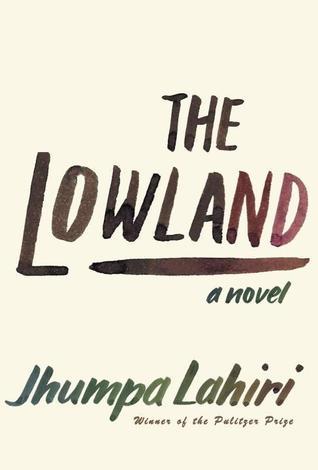
THE LOWLAND
Hey Jhumpa!
Your name is so rhythmic that I could not resist addressing you while writing my thoughts about your book. It has some musical inkling in it, though I am not at all aware of its meaning!
I am a fan of your subtle observation and of your crispness when you depict that ambiance in and around the characters in your prose. You do it so well that I usually get immersed in it. I came across your writings for the first time in The Namesake and when I have finished your second book; my opinion about your penning skills has not changed much. Though I had not much liked the subject matter of The Namesake, years ago when I read it, I can give it another try anytime soon, with this confession that I have now somehow, developed the patience and a kind of forbearance, of venturing into the realms of those stories, which were never my cup of tea a few years back.
Compared to that I liked this story more because of its range and prevalence not only in terms of space and time but also in terms of the sweep, it has produced within and outside of those relationships, which you carried forward to the next generations of your characters.
“Subhash brought his hands together. He felt the weight of his brother‘s foot, the worn sole of his sandal, then his whole body, bearing down for an instant. Quickly Udayan hoisted himself up. He straddled the wall.”
the lowland
You began your story of two brothers Subhash and Udayan, who had never set the foot in the Tolly Club, like most people in the vicinity, they had passed by its wooden gate, its brick walls hundreds of times. One of them later applies for a Ph.D. in the US and the other one gets affected by the early Naxalite movement of the late 1960s emanating and gaining ground from the Naxalbari region.
“Udayan quoted what the Chinese press had predicted: the spark in Darjeeling will start a prairie fire and will certainly set the vast expanses of India ablaze.”
THE LOWLAND
There are repulsive characters in your novel. There is infatuation. Atonement is there. There are interlinking tragedies, painful events, and their life-long impressions going from one generation to others in your story and then there is your engrossing way of writing the minute details of immigrant lives. I loved it.
But I have two issues once again, first, your prose became quite expository in the midway where I lost interest in the plot, and second I felt no emotional connection with the characters, at many places, where I was expecting some emotional dialogues, some feelings and sentiments enfolding your characters. You just moved the story ahead with the single, flat and short line, making it a kind of cerebral progression in the story. That is probably your style; I disfavored it at those points. While analyzing this, I am very much sure that you’ll be a better short story writer than a novelist, though I am yet to go through your short fictional work. This is just my assumption so far!
However, the final one-third part of your story aroused some of those out of sight sentiments; I was missing since the beginning. The character of Bela and then the redemption of Gauri made this book a pleasing reading experience for me.
Overall I would appreciate your daunting effort of painting the Bengali culture with US-style realistic living in the backcloth of the historical Naxalite movement. I would call it representative fiction, where you have represented multiple motifs through your characters. Repercussions of Tollygunge, built on the reclaimed land on the Bay of Bengal, in the lives of people of Rhode Island in America and reverberations of tragedies associated with Udayan’s engagement with Naxalism within the lives of this generation and the next generation have been envisioned by you wonderfully.
Thanks!
19th Century 20th Century Adventure Africa American Asia Booker British Literature Children Classic contemporary Crime Detective Drama Essays fantasy French Literature German Literature Gothic Historical Fiction Horror Humor India Indian Literature magical realism Memoir Music Mystery Nature Netgalley Nobel Prize Non Fiction Novel Novella Philosophy Play Poetry Race Romance Russia Russian Literature School Short Stories War Women
 BOOKBROODER